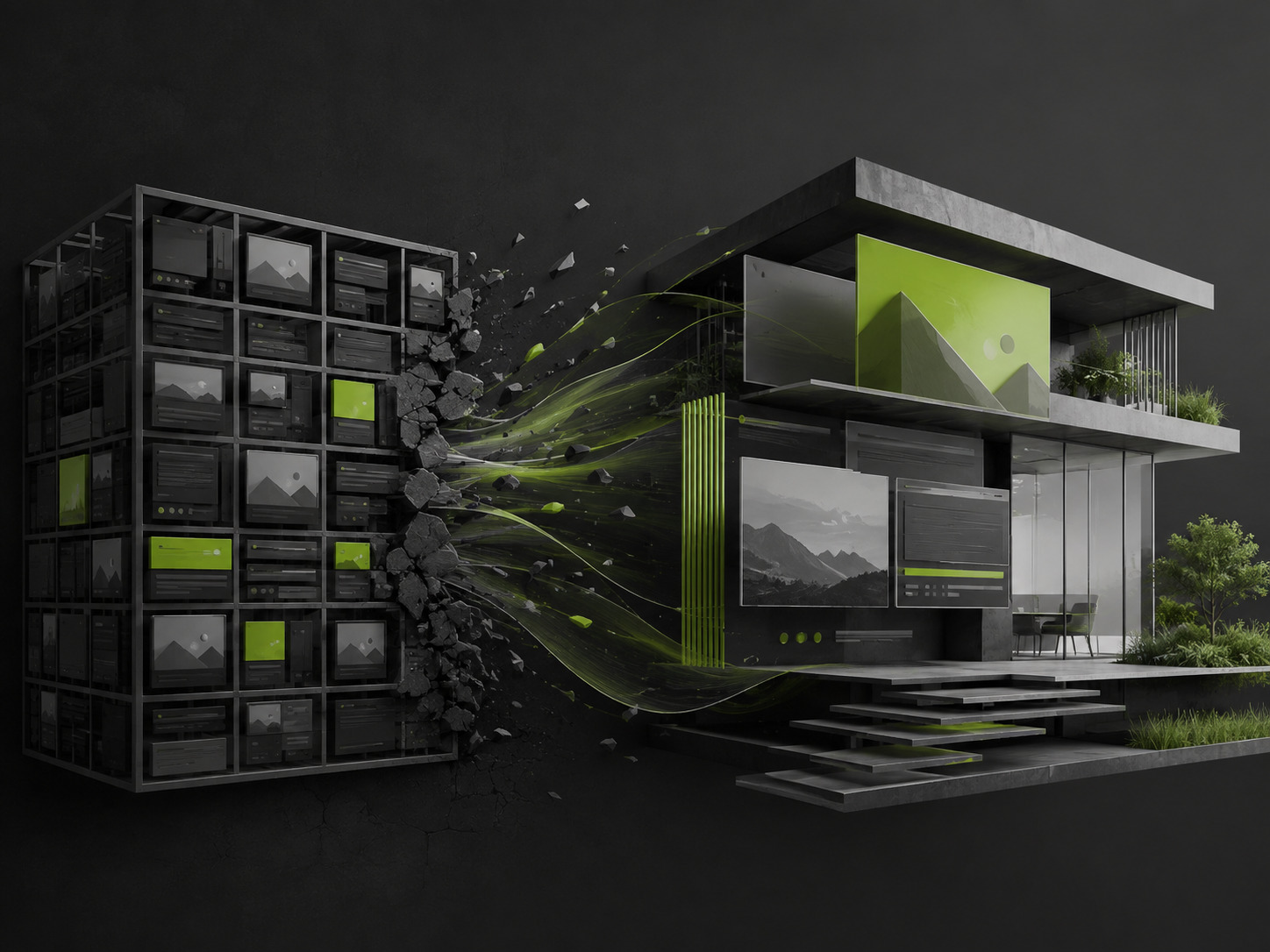
WordPress and a good theme are how a great many brands get their first proper website, and there is nothing wrong with that. A theme is fast, cheap, and capable enough to carry a business a long way. The trouble arrives quietly, later, when the brand has grown and the site has not, and the theme that once made everything easy has started making everything hard.
This is a specific and common moment: not a broken site, but one that has become a ceiling. Pages load slowly and nobody can say why. Every change is a negotiation with the theme. The plugin list keeps growing. The brand has outgrown the template, and the question is no longer whether to leave WordPress, which is rarely the answer, but how to develop on it properly so it fits the business again.
The signs you have outgrown your theme
The symptoms are consistent enough to be diagnostic. The site is slow and the usual fixes do not move it. You run a long list of plugins, some doing overlapping jobs, and every update feels like a gamble. When you want a change, you either fight the theme's assumptions or reach for another plugin to bolt it on. And the site increasingly looks like the theme rather than your brand.
Individually these are annoyances. Together they mean the theme has crossed from enabling you to constraining you. The tool that made the early days easy is now the reason routine work is slow, risky, and frustrating, and no amount of further plugins reverses that. That crossover is the signal it is time for real development.
Performance is usually the first wall
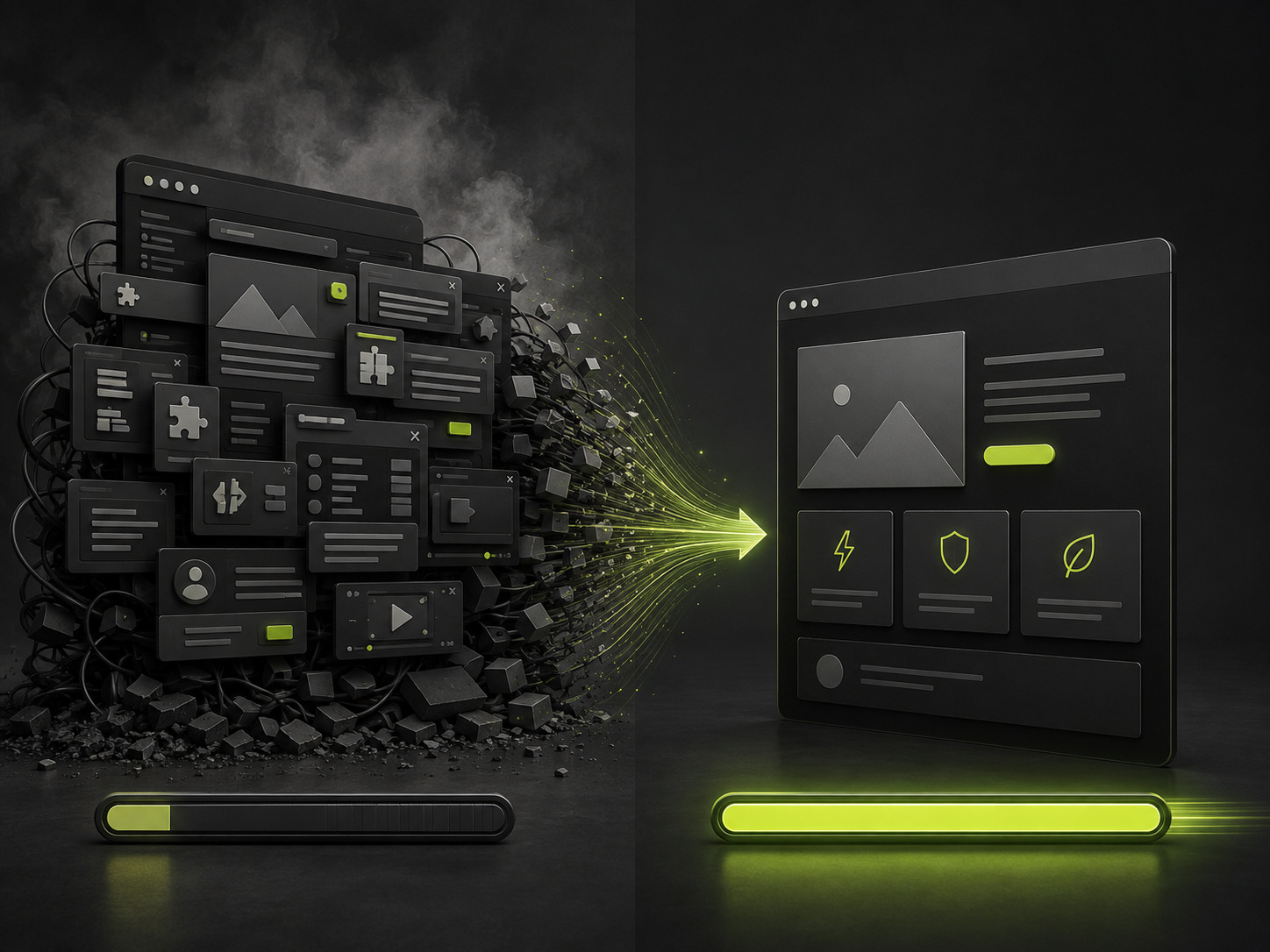
Speed is where most brands feel the limit first, because it is visible and costs money. A theme is built to suit many businesses, so it loads code and features you will never use, and each plugin adds weight on top. The result is a site slower than it should be, and past a point the theme's own structure makes it very hard to fix without rebuilding the front end.
This matters beyond impatience. A slow site loses visitors before they convert, and search engines factor page experience into rankings. Custom development strips the site back to what it actually needs, often the single biggest performance gain available, and one a plugin-heavy theme cannot match.
Plugin sprawl and fragility
The plugin ecosystem is one of WordPress's great strengths and, unmanaged, one of its quiet weaknesses. Every plugin you add to fill a gap the theme left is more code from a different author, more that can conflict, more to keep updated, and more that can break when something else changes. A site held together by twenty or thirty plugins is fragile, and one update can take the whole thing down.
Custom development replaces much of that sprawl with functionality built directly for your needs, so features are part of a coherent whole rather than third-party parts hoping to coexist. You trade dependencies you do not control for code that does exactly what you require and nothing you do not.
Custom development: keep WordPress, lose the constraints
The reassuring part is that outgrowing a theme almost never means leaving WordPress. Brands stay for the content management: your team knows how to publish, edit, and run the site day to day, and that familiarity is genuinely valuable. Custom development keeps that and removes the ceiling above it.
In practice it means a design and front end built for your brand rather than adapted from a theme, features built to your requirements instead of assembled from plugins, and a clean, maintainable foundation underneath. You keep the WordPress your team knows and lose the template holding it back, usually exactly the trade a growing brand wants.
Headless, and when it is actually worth it
One option you will hear about is headless WordPress, where WordPress runs purely as the content system and a separate, modern front end delivers the site. Done well it can bring strong performance and front-end flexibility while your team keeps editing content exactly as before. It is a genuinely powerful approach for the right site.
It is not, however, a default. Headless adds complexity and cost, and for many sites a well-built conventional WordPress site delivers everything they need without it. It earns its place when performance demands are high or the front end is genuinely complex, and is over-engineering when they are not. The right answer depends on the site, not the trend.
Doing it properly: performance, security, maintenance

Custom development is only worth doing if it is done properly, because a badly built custom site is worse than a good theme. That means clean, performant code, security handled seriously rather than left to a plugin, sensible hosting, and a real plan for maintenance and updates. WordPress powers a huge share of the web, which makes it a target, so security and upkeep are not optional extras.
Built and maintained with that discipline, WordPress handles serious scale and stays fast and secure for years. That standard is what our WordPress development work is built around, because the point of moving off a template is to end up with something more robust, not just newer. Custom without discipline simply trades one set of problems for another.
How we approach it
We start by working out whether you have genuinely outgrown your theme or just need a tune-up, because not every slow site needs a rebuild. When it does, we keep WordPress as the content system your team knows, build the design and features your brand needs, strip out the plugin sprawl, and put performance, security, and maintainability at the centre rather than treating them as afterthoughts.
That approach is what we bring across more than 500 brands in the US, UK, and Canada. As a global company with our headquarters in Delaware and teams in London and Gurugram, the aim is the same every time: a WordPress site that fits the brand it has grown into, fast and secure and easy to run, rather than a template quietly holding a good business back.
Where this leaves you
Outgrowing a WordPress theme is a sign of success, not failure: the brand grew past the tool that started it. The fix is rarely to leave WordPress and almost always to develop on it properly, keeping the content management your team relies on while removing the constraints the template imposed. Watch for the signs, slowness you cannot fix, plugin sprawl, changes that mean fighting the theme, a site that looks like its template, and when they add up, invest in a clean custom build done with real attention to performance, security, and maintenance. If your site has started to feel like a ceiling, tell us what it needs to do and we will tell you honestly whether it needs a tune-up or a rebuild.
Frequently Asked Questions
What is custom WordPress development?
Custom WordPress development means building your site's design and functionality specifically for your business, rather than relying on a pre-made theme and a stack of plugins. You keep WordPress as the content system your team already knows, but the front end, features, and structure are built to fit exactly what you need. It is the natural next step for a brand that has outgrown a template but does not want to abandon WordPress, removing the constraints a theme imposes while keeping the familiar editing experience.
How do I know I have outgrown my WordPress theme?
The signs are consistent. The site has become slow and you cannot easily fix it. You are running a long list of plugins, some overlapping, and updates feel risky. Making a change you want means fighting the theme or paying for another plugin, and the design increasingly looks like the theme rather than your brand. When routine changes have become hard, slow, or fragile, the theme has stopped enabling you and started constraining you, which is the moment to consider proper development.
Is WordPress good for large or high-traffic sites?
Yes, when it is built properly rather than assembled from a theme and dozens of plugins. Plenty of large, high-traffic sites run on WordPress successfully because they invested in performance, clean code, sensible hosting, and disciplined maintenance. The perception that WordPress does not scale usually comes from bloated, plugin-heavy template sites, not from the platform itself. Built with care, WordPress handles serious scale while keeping the content management that makes it popular in the first place.
What is headless WordPress?
Headless WordPress uses WordPress purely as the content management system while a separate, custom front end delivers the actual site to visitors. Your team keeps editing content in the familiar WordPress admin, but the pages people see are built with a modern front-end stack rather than a theme. It can bring real gains in performance and flexibility, but it adds complexity and cost, so it is worth it for sites with demanding performance needs or complex front ends, and overkill for most.
Should you rebuild or improve an existing WordPress site?
It depends on how deep the problems go. If the foundations are sound and the issues are a bloated plugin or two and some performance debt, targeted improvement is cheaper and sensible. If the theme itself is the constraint, the plugin stack is tangled, and every change is a fight, improvement only delays the inevitable and a proper rebuild on clean foundations is the better investment. The honest test is whether the current base can carry where you are going, or whether you are endlessly working around it.
Want this done for your brand?
Tell us where you are and what you are trying to grow. We will reply with a straight read on your situation and what is worth doing first. No obligation, no lock-in.