









How Local Pack Ranking Actually Works
Google ranks the local map pack on three signals: relevance, distance and prominence. Relevance is how well your profile and site match the searcher's intent, including the category you choose and the words on the page. Distance is how close you are to the point the search was made from, which on mobile is often the person's exact location rather than a city centroid. Prominence is how well known and trusted your business is, measured through reviews, links, citations and the strength of your wider web presence. The map pack is a different game from the ten blue links below it. Those organic results are won mostly on content depth and backlinks. The pack leans far more on profile data, proximity and review signals, which is why a thin local website can still outrank a national brand for a nearby search.
A worked example makes the split obvious. Search "emergency plumber" from two addresses four miles apart and you will often see two almost completely different three-packs, because distance reshuffles the results for each searcher. Run the same query as a non-local, informational phrase and the pack may not appear at all. That is the practical reason we treat pack work and organic work as two connected programs rather than one undifferentiated SEO push: the levers are weighted differently, and a tactic that wins the pack will not always win the blue links underneath it.
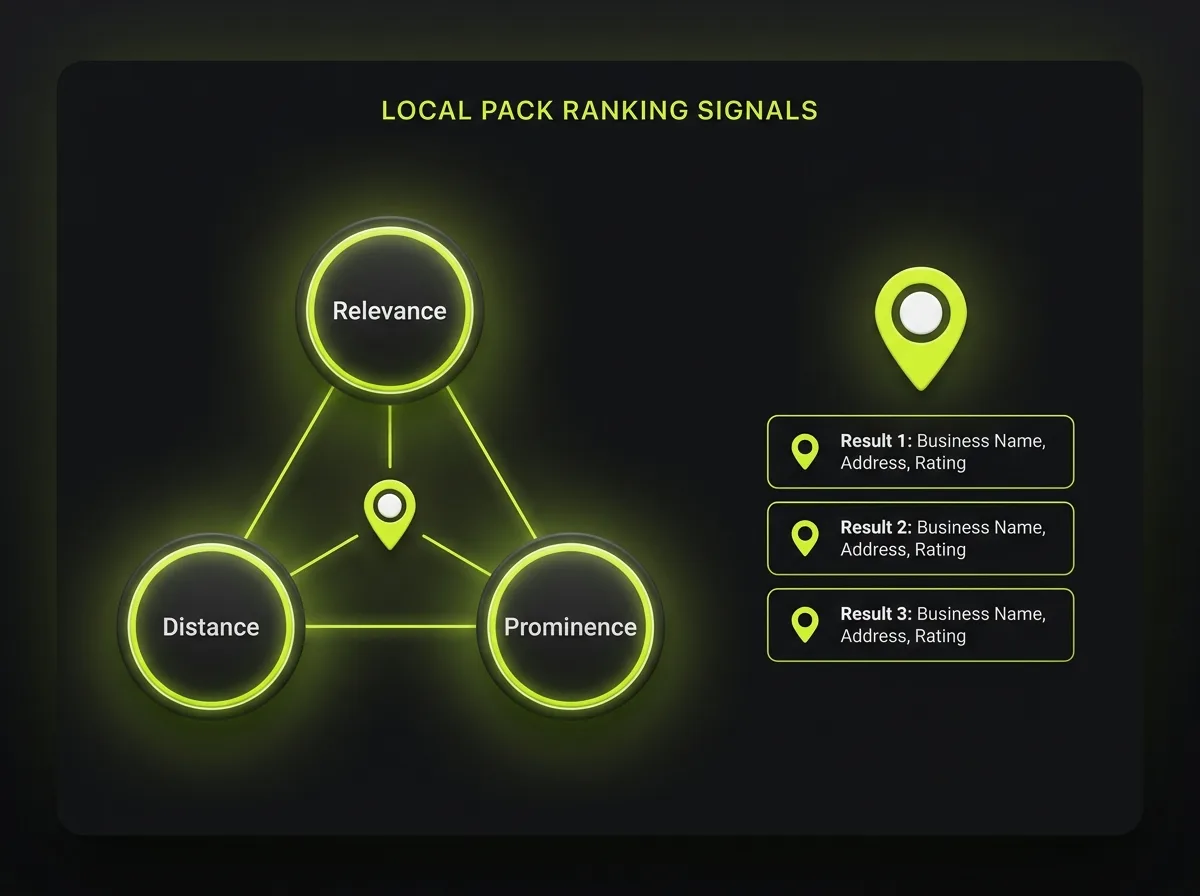
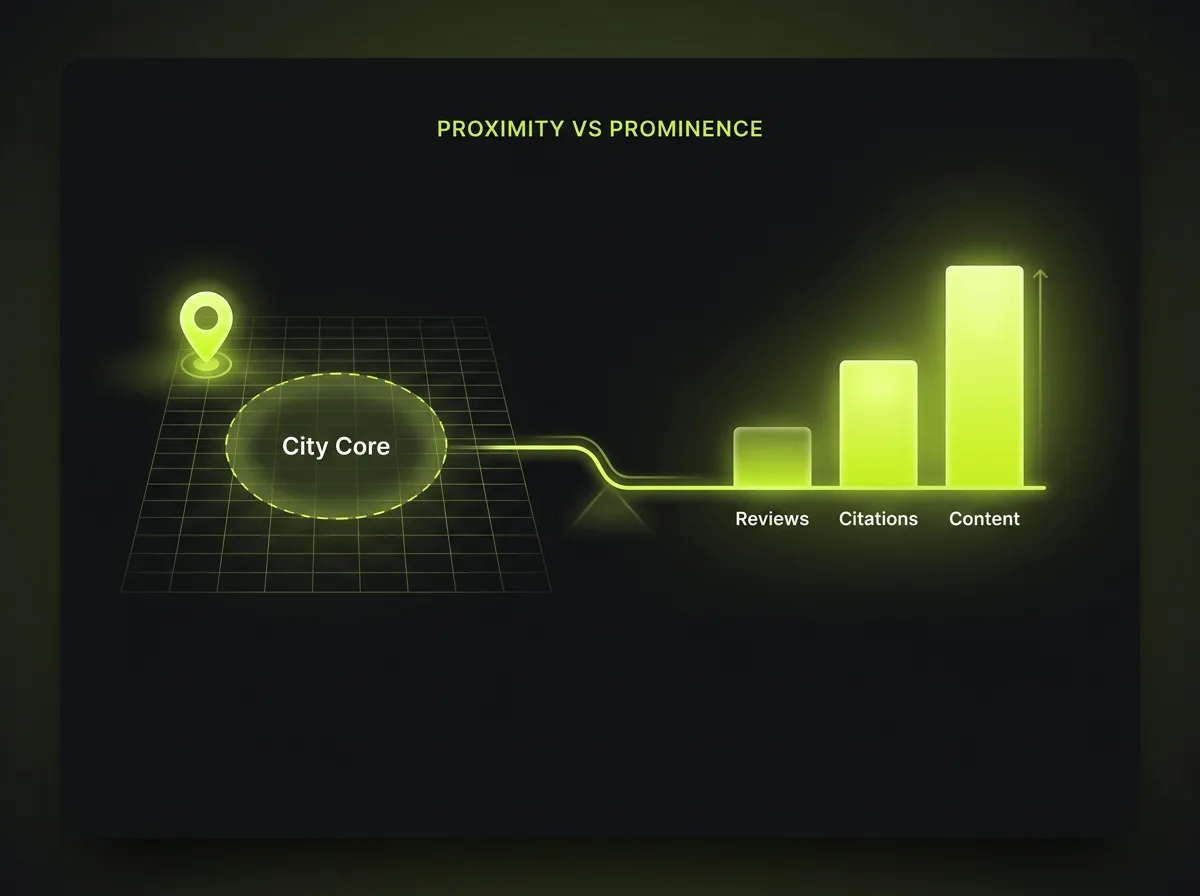
Distance is the one lever you cannot move, and it caps how far your reach extends. You cannot relocate your storefront to the center of a city. What you can do is offset a proximity disadvantage with stronger prominence: more genuine reviews, consistent citations, and topical content that proves you serve that area. We have repeatedly pushed businesses sitting two or three miles outside the dense core into the pack by building that prominence harder than the closer competitors bothered to. If your category and proximity are roughly equal to a rival, prominence is what decides the order. That is where the work compounds.
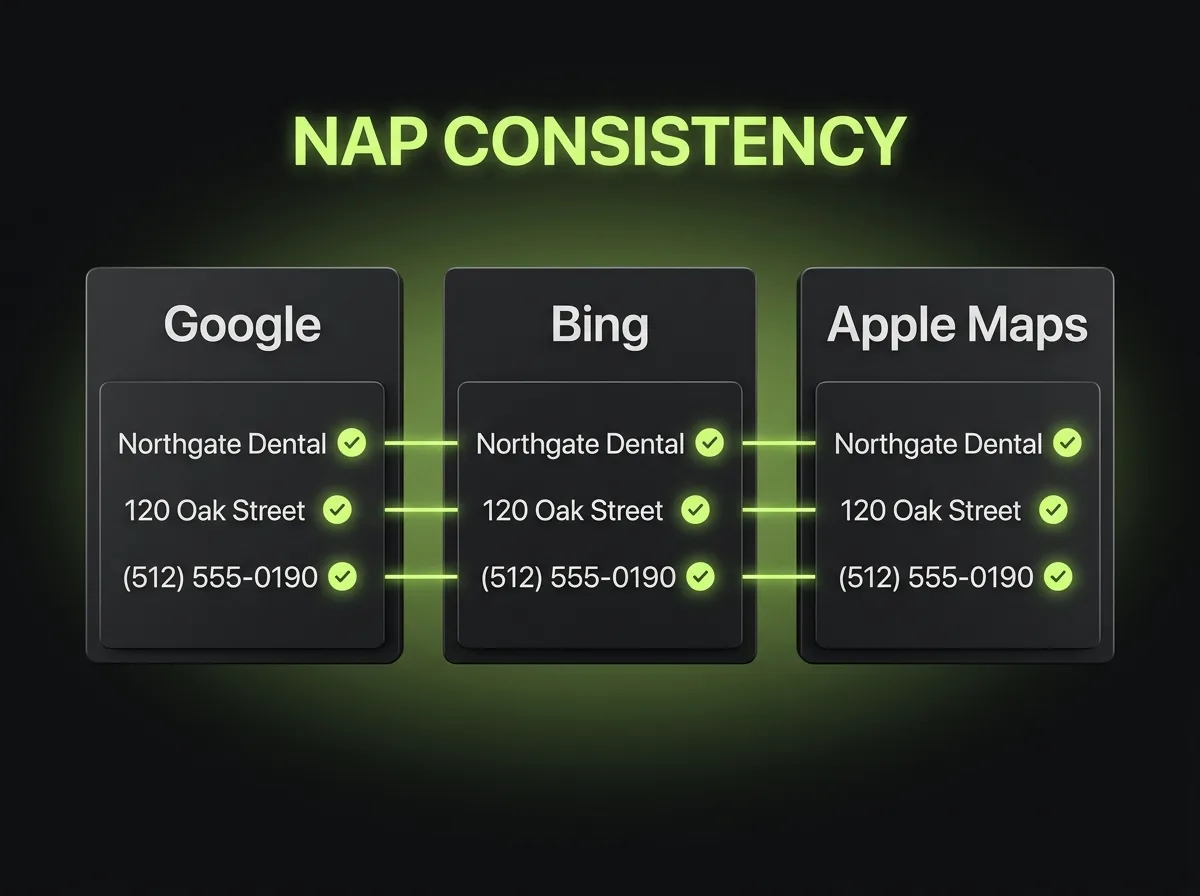
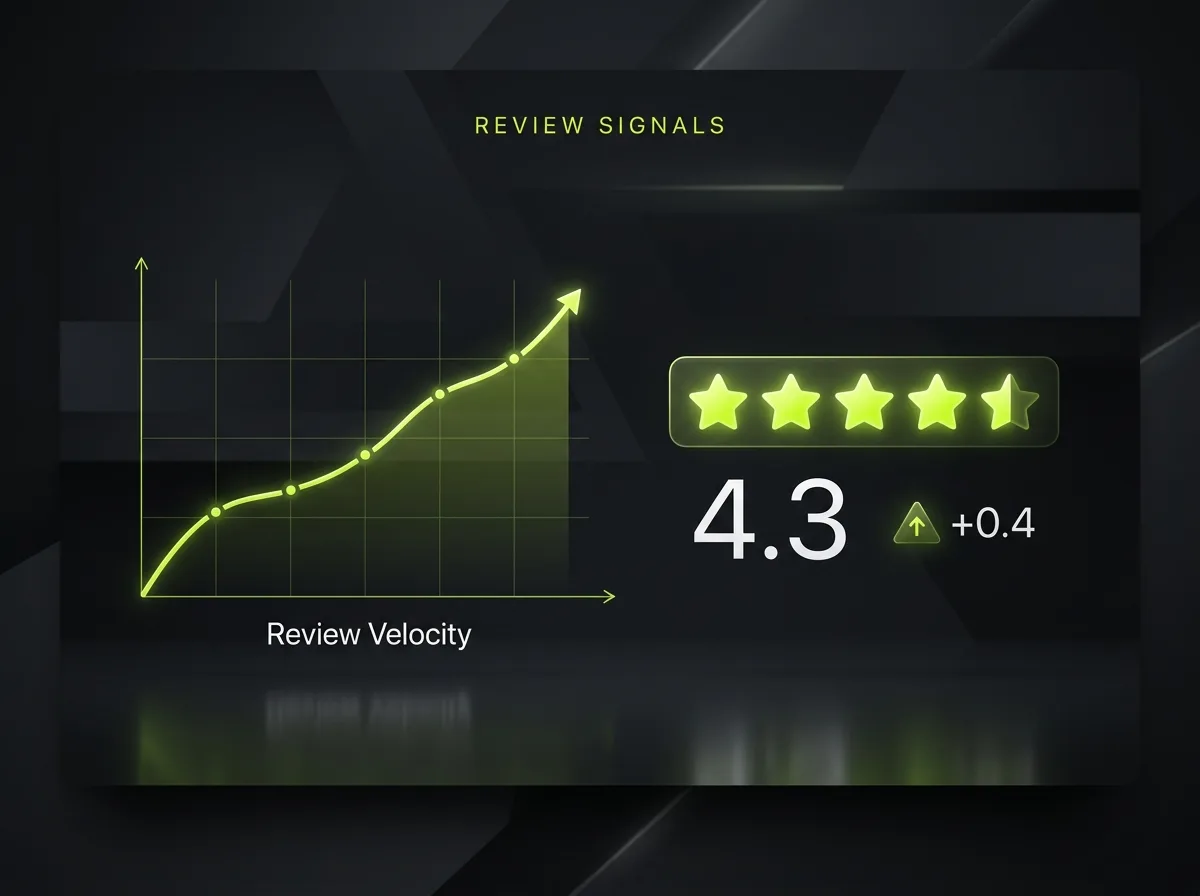
Practically, prominence is the sum of a handful of measurable inputs you can actually grow: review count and recency, the number and quality of citations that confirm your details, links from locally relevant sites, and content that names the neighborhoods and problems you handle. None of these is a single magic switch. They accumulate, and the businesses that win the pack from a weaker location are the ones that treat prominence as an ongoing program rather than a one-time setup. This is also why local and organic SEO reinforce each other rather than compete: a strong organic footprint feeds the prominence signal that lifts the pack. Read how we treat the two as one program on our ecommerce SEO and broader marketing pages.