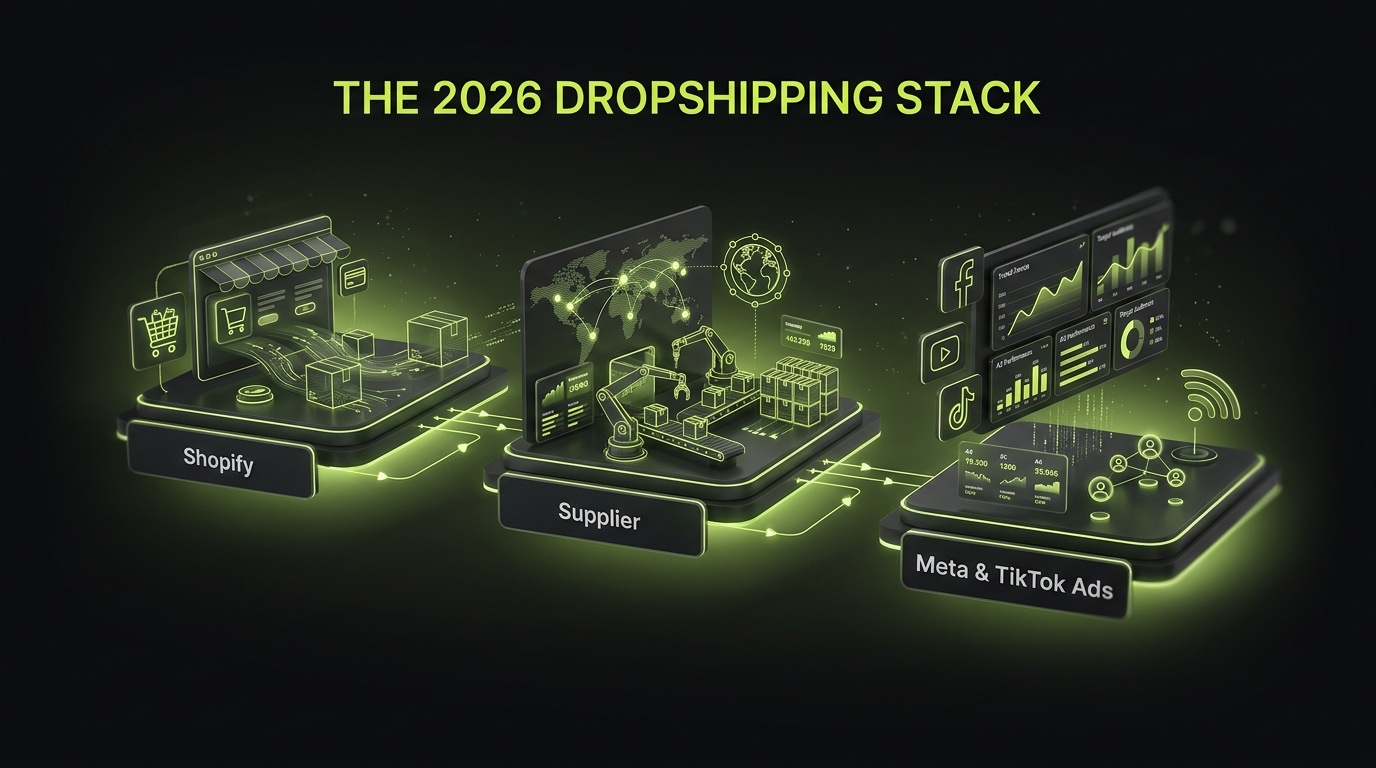
Most guides to starting a Shopify dropshipping store spend nine tenths of their words on the part that matters least. They walk you through picking a theme, choosing fonts, writing an About page, as if the storefront were the business. It is not. The storefront is the easy bit, and it is also the bit that almost never decides whether you make money. The store is just the window. What sits behind it, the supplier who actually ships the product and the ads that bring people to the window in the first place, is where the whole thing lives or dies.
So this is a look at the real stack in 2026: the four pieces that have to work together, in the order they actually matter, and the places setups quietly fall apart. The easy-money version of dropshipping is gone, and good riddance, because what is left is a legitimate, if demanding, way to start an online business. Treat it like a business and it can work. Treat it like a lottery ticket and it will cost you exactly as much as one usually does.
The four pieces of the stack
Strip away the noise and a working store is four things wired together. A Shopify store that loads fast and earns enough trust for a stranger to hand over a card. A supplier connection that imports products and routes each order to whoever ships it. A payment setup that both customers and Shopify trust enough to keep your money flowing. And an ads engine, almost always Meta and TikTok at the start, because a brand-new store has no audience and no search authority to lean on.
The mistake nearly everyone makes is to rank those in the wrong order. The store gets the attention because it is visible and fun to tweak. But the supplier and the ads are the spine. A beautiful store fed by a supplier who ships in five weeks, or by ads that lose money on every order, is a beautiful way to go broke. So as you read the rest of this, keep the weighting in mind: the storefront is table stakes, and the two pieces that actually need your judgement are who fulfils your orders and how you buy your traffic.
The store: trust, speed, and not much else
Shopify earns its place here because it removes almost all of the technical friction. You are not standing up servers or wrestling a checkout into working; you get a hosted, secure store and a checkout that converts well out of the box. That is genuinely valuable, and it is why most dropshippers start here rather than on a self-hosted platform that hands them more control and a great deal more to break.
What the store needs from you is narrow. It has to load quickly, because a slow first impression kills a paid visitor you just paid to acquire. It has to look credible, since a stranger is deciding in seconds whether you are a real business or a scam, and a cluttered theme stuffed with countdown timers screams the wrong answer. And the product pages have to be honest and specific: clear photos, real descriptions, plain shipping expectations. Beyond that, resist the urge to keep polishing. Hours spent perfecting a hero image are hours not spent on the supplier and the ads, which is where the money actually moves. If you want a store built to scale cleanly from the start, that is squarely a Shopify development question, not a theme-shopping one.
The supplier: where the experience is really decided
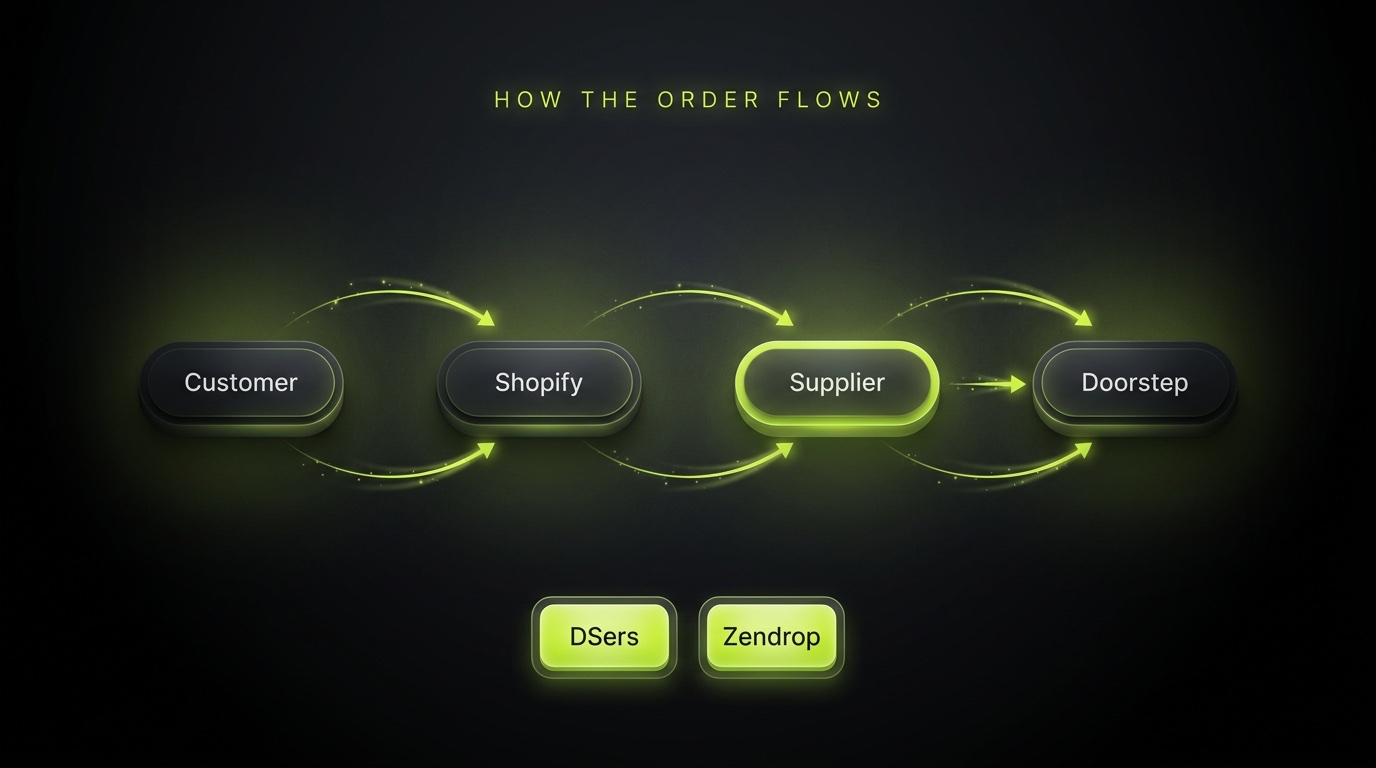
Here is the part the storefront-obsessed guides skip. When a customer buys from you, your store places the order with a supplier, the supplier ships it, and the customer judges you, not the supplier, on what arrives and how long it took. You are renting someone else's fulfilment and putting your name on it. That makes the supplier the single most important choice in the whole setup, and the one most likely to sink a store that got everything else right.
For testing on a budget, a connector like DSers is the usual on-ramp: it plugs into an enormous catalogue and costs little to start, at the price of slower, less predictable shipping. That is a fine trade while you are finding out whether anyone wants the product at all. The moment real customers arrive, the calculus changes, and many owners move to a supplier or sourcing agent who ships faster and holds quality steady, because thin margins cannot survive a wave of refunds and chargebacks from angry buyers. The lesson worth carrying: catalogue size is a vanity metric, fulfilment reliability is the one that keeps you in business.
Payments: boring, and quietly fatal if you skip it
Payments rarely make anyone's exciting-setup list, which is precisely why they catch people out. You need a payment setup that customers trust at checkout and that Shopify and your processor will keep open as your volume grows. New stores in higher-risk categories sometimes find a processor holds funds or freezes an account when sales spike, simply because the pattern looks suspicious from the outside. None of that is hard to navigate, but it has to be set up deliberately, with accurate business details and a clear refund policy, rather than clicked through at midnight. A store that cannot reliably collect and keep its money is not a store, however good the front end looks.
The ads engine: how you actually get customers
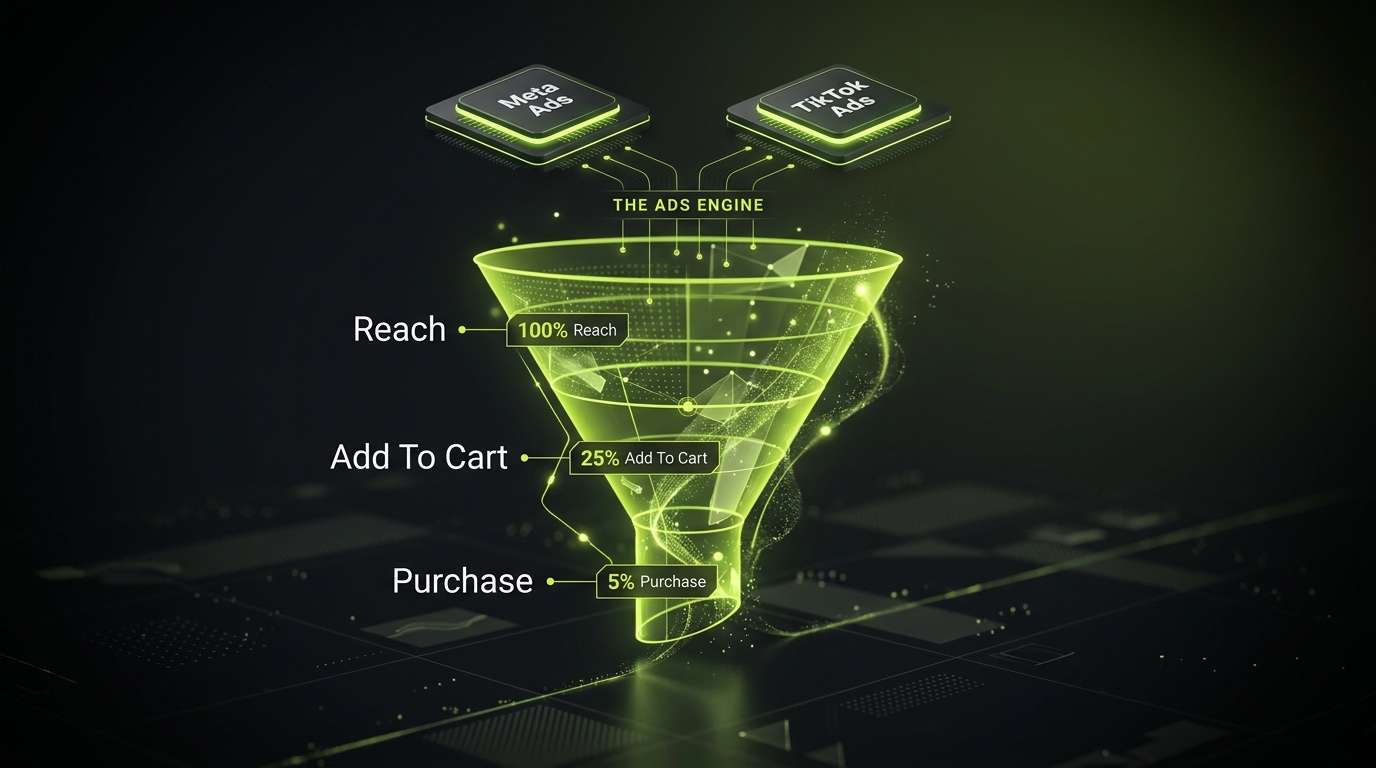
Now the engine that drives everything. A new store has no organic traffic and no search authority, so at the start you buy your visitors, full stop. Paid social is where most stores begin, because Meta and TikTok let you put a product in front of the right audience quickly and find out, with real money, whether anyone wants it. The model is simple to describe and hard to do well: run a small set of products and creatives, watch which combination converts at a profit, kill the rest, and scale spend behind the winner.
The discipline that separates stores that survive from stores that do not is the number you optimise for. Clicks and views feel like progress and pay no bills. Profit per order does. Because dropshipping margins are thin, an ad that looks fine on click-through rate can still lose money on every sale once you subtract product cost, shipping, and ad spend, so you have to watch the whole funnel down to purchase rather than the flattering numbers at the top. This is where most testing budgets die, not because the products were unsellable, but because spend got scaled on hope instead of on the math. Getting that math right, and the creative testing around it, is the heart of serious performance marketing, and it is the skill that actually compounds.
Over time you want to stop renting every visitor. The healthiest stores layer in cheaper, durable channels, organic content, email, search, so paid ads are the accelerator rather than the entire engine. That broader mix is the difference between a store and a brand, and it is the same instinct behind sound ecommerce marketing: spend to find demand, then build the channels that keep it coming back for less.
Where setups go wrong
Almost every failed store traces back to the same short list, and none of the items on it is the theme. A product with no real demand or no margin, picked because it went viral rather than because anyone needs it. A supplier who ships slowly and inconsistently, turning first customers into refunds. Ad spend scaled on a good feeling instead of a profit number, burning the testing budget before a winner ever appeared. And, underneath all of it, treating the storefront as the business while neglecting the supplier and the ads that are the actual business.
The encouraging flip side is that fixing those three, demand, fulfilment, and disciplined paid testing, makes most of the other problems shrink on their own. The stores that work in 2026 are not the ones with the slickest themes. They are the ones built like real businesses on a defensible niche, fed by a supplier who delivers and an ad engine measured in profit.
Where this leaves you
Shopify dropshipping is not a get-rich scheme and was never really meant to be one. It is a low-inventory way to start an online business, and the modern stack is honest about what that takes: a fast, trustworthy store, a supplier you would not be embarrassed to put your name on, a payment setup that keeps your money moving, and an ads engine run with discipline rather than hope. Get the order of importance right, lead with the supplier and the ads, and you have something that can actually become a brand instead of a cautionary tale.
If you would rather have a team build the store, wire up the supplier and payments, and run the ad testing for you, that is the work we do. Tell us the niche you have in mind and we will tell you, plainly, whether the numbers can work and what the first version of the stack should look like. You can see how we approach it on our dropshipping page.
Frequently asked questions
What does a Shopify dropshipping store actually need in 2026?
At minimum it needs four things working together: a Shopify store that loads fast and looks trustworthy, a supplier connection that imports products and routes orders for fulfilment, a payment setup that customers and Shopify both trust, and an ads engine, usually Meta and TikTok, to bring in traffic since a new store has no organic audience. The store is only the storefront. The part that decides whether you make money is the supplier you pick and the ads that feed it, so treat those two as the real spine of the stack rather than an afterthought.
How much does it cost to start a Shopify dropshipping store?
The platform itself is modest: a Shopify plan plus a supplier app and maybe a theme. The real budget is ad spend and testing. Because dropshipping margins are thin and you are buying every visitor through paid ads at the start, the money goes into testing products and creatives until something works, not into the store software. Anyone who tells you it is nearly free is selling the storefront and quietly ignoring the part that actually costs money, which is finding a winning product and a profitable ad before your testing budget runs out.
Which dropshipping supplier app should I use with Shopify?
For testing on a budget, DSers remains the common starting point because it connects to a huge catalogue and is cheap to begin with, at the cost of longer shipping times. As a store grows, many owners move to a supplier or agent that offers faster, more consistent fulfilment and better quality control, which protects the customer experience that thin-margin businesses cannot afford to get wrong. The right answer depends on your product and your margins; the principle is that fulfilment quality, not catalogue size, is what keeps a store alive once it has real customers.
Is Shopify dropshipping still worth it in 2026?
It is still a legitimate way to start an online business with low upfront inventory, but it is harder and more competitive than the early hype suggested, and the easy-money version is gone. What works now is treating it as a real business: a tight niche, a supplier who ships reliably, honest product pages, and disciplined ad testing with numbers you actually watch. Owners who chase a single viral product and ignore margins and fulfilment tend to lose money. Owners who build a genuine brand around a defensible niche can still do well.
How do I drive traffic to a new dropshipping store?
At launch you buy it, because a brand-new store has no audience and no search authority. Paid social, mostly Meta and TikTok, is where most stores start, running a small set of products and creatives to find a combination that converts profitably before scaling spend behind the winner. Over time you layer in cheaper, durable channels such as organic content, email, and search so you are not renting every visitor forever. But on day one the realistic answer is disciplined paid ads, measured by profit per order rather than clicks.
What is the most common reason dropshipping stores fail?
Running out of testing budget before finding a product and an ad that are profitable together, usually made worse by thin margins and slow, inconsistent shipping that turns first customers into refunds and chargebacks. The store software is rarely the problem. Failure almost always traces back to the same trio: a product with no real demand or margin, a supplier who cannot fulfil reliably, and ad spend that was scaled on hope rather than on numbers. Fix those three and most of the other problems get a lot smaller.
Want this done for your brand?
Tell us where you are and what you are trying to grow. We will reply with a straight read on your situation and what is worth doing first. No obligation, no lock-in.