
Almost every app project hits the same fork early on. Do you build it once with a cross-platform framework like React Native and ship to both iOS and Android, or do you build two separate native apps, one in each platform's own language and tools? It sounds like a technical detail to settle later. It is actually one of the first decisions that shapes your budget, your timeline, and how the product feels in someone's hand.
The debate often gets treated like a loyalty test, as if you are supposed to pick a side and defend it. That framing is the fastest way to choose wrong. Neither approach is better in the abstract. The right answer depends on what your app does, who is building it, and what you are trying to protect. Get the question right and the choice gets a lot simpler.
What native and React Native actually mean
Native development means building each app in the toolset the platform was designed around: Swift for iOS, Kotlin for Android. You write the iOS app and the Android app separately, and each one talks directly to its platform with nothing in between. That direct line is the source of native's strengths and also its cost, because you are effectively building and maintaining two products.
React Native takes a different path. You write the app once, mostly in one shared codebase, and it renders real native interface components on both platforms rather than running inside a browser shell. The result is a genuine app on each store, not a website in disguise, built from one source of truth that two platforms share. That shared source is where most of the savings come from, and understanding that trade is the whole point of the comparison.
Where native still earns its keep
Native is the right call when the core of your app lives close to the hardware. Graphics-heavy games, augmented reality, demanding on-device processing, and experiences that lean on the very latest platform features all benefit from the direct access native gives you. When responsiveness to the millisecond is the actual product, that direct line matters and is worth paying for twice.
There is also a timing argument. When Apple or Google ships a brand new capability, native developers can reach it first, because they are working in the platform's own tools without waiting for a framework to catch up. For a small set of apps, being first to a new hardware feature is a real advantage. For most, it is a nice-to-have that never becomes a deciding factor.
Where React Native wins
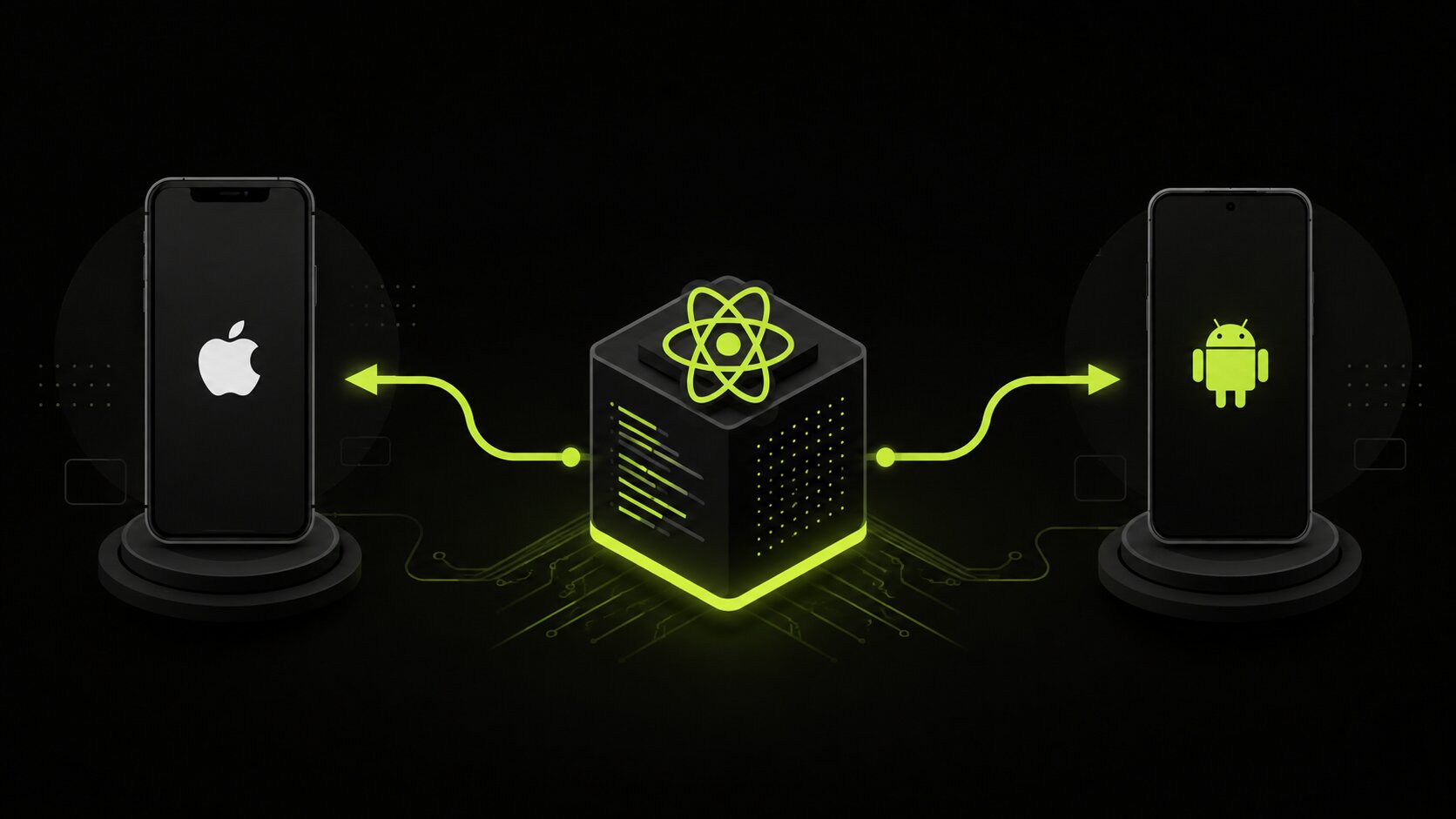
For the broad middle of the app world, which is to say most products, React Native is the more sensible default. The reason is simple arithmetic. One codebase means one team building one app that reaches both platforms, instead of two teams building two apps that have to be kept in step forever. The bigger saving is not the initial build, it is every update after launch, when a single change ships to everyone at once.
It also helps you move faster when speed matters most, early on. Getting a working product into real users' hands on both platforms, learning from how they actually use it, and iterating quickly is often worth more than squeezing out performance most users will never perceive. Content apps, commerce, booking, social, and the large category of internal and customer-facing business apps all sit well inside what React Native does comfortably. This is the practical thinking behind most of the mobile application development work we take on.
The questions that actually decide it
Strip away the framework loyalty and the decision usually comes down to a handful of honest questions. What does the app fundamentally do, and does its core value depend on platform-specific, performance-critical work? If yes, lean native. If not, the cross-platform case gets strong fast.
Who is going to build and maintain it? A team fluent in JavaScript and React can be productive in React Native quickly, while two native apps need skills in two separate ecosystems. What is your timeline and budget, and do you need both platforms at once or can you stagger them? And how often will the app change after launch, since a product that updates constantly compounds the cost of maintaining two codebases. Answer those plainly and the technology tends to choose itself.
Cost and timeline, honestly

It is tempting to want a single number for what an app costs, but the honest answer is that the stack you choose moves that number in predictable directions. Two native builds carry two sets of build and maintenance effort, which generally means a higher total and a longer road to having both platforms live. One shared codebase compresses both, which is exactly why so many teams start there.
The part people miss is that the real expense of an app is not the launch, it is the years of updates, fixes, and new features that follow. A choice that looks cheaper to build can become the more expensive one to live with. The goal is not the lowest build quote, it is the lowest cost of ownership for the app you actually intend to run.
How we approach the choice
We do not start from a preferred technology and work backward. We start from the app: what it has to do, who it is for, how fast it needs to ship, and how it will grow. Most products are well served by a shared codebase, so that is where we lean, and we reach for native, or for a small amount of native code inside a React Native app, when something specific genuinely calls for it.
That balance is the discipline we bring across more than 500 brands in the US, UK, and Canada. As a global company with our headquarters in Delaware and teams in London and Gurugram, the aim is the same every time: the stack that fits the product, not the one that wins an argument. An app you can afford to build, run, and improve for years beats a purist choice you regret after launch.
Where this leaves you
React Native versus native is not a contest with a permanent winner. It is a fit decision. Native protects experiences that live close to the hardware and depend on raw performance or the newest platform features. React Native serves the much larger group of apps where reaching both platforms quickly, from one codebase you can maintain affordably, is what actually matters. Decide based on what your app does and how you will run it, not on which side of the debate sounds more impressive. If you would like a second opinion before you commit, tell us what you are building and we will tell you, plainly, which way we would go and why.
Frequently Asked Questions
Is React Native good enough for a production app?
For most apps, yes. React Native runs serious, high-traffic products used by millions of people every day, so the technology is well past the question of whether it can handle real workloads. What matters is the kind of app you are building. Content, commerce, booking, social, and most business apps sit comfortably inside what React Native does well. The places it strains are narrow and specific, like heavy real-time graphics or deep hardware control, and those are the exception rather than the rule.
Is React Native cheaper than native development?
Usually, because you build and maintain one codebase instead of two. A single team ships to both iOS and Android, which lowers the build cost and, more importantly, the ongoing cost of every future update. The saving is real but not unlimited. Polished apps still need platform-specific attention in places, and a small amount of native code is sometimes unavoidable. Treat React Native as a way to spend your budget more efficiently, not as a way to get a serious app for nothing.
When should I choose native over React Native?
Choose native when the app's core value depends on something a particular platform does best. That includes graphics-intensive games, augmented reality, heavy on-device processing, tight integration with the newest hardware features, or experiences where every millisecond of responsiveness is the product. If the thing that makes your app worth using lives close to the metal, building native for each platform protects that experience. For the large majority of apps, the core value does not depend on that, and the cross-platform route serves them better.
Can React Native match native performance?
For the vast majority of interactions, the difference is not something a user would notice. Scrolling, navigation, forms, media, and network-driven screens all perform well. The gap shows up only at the extremes, in very animation-heavy interfaces or sustained, intensive on-device computation, where native has more direct access to the hardware. The honest answer is that performance is rarely the deciding factor for a typical business or consumer app, and when it genuinely is, that is a strong signal to go native.
Should I build one app for both platforms or two separate native apps?
Start from the app, not the technology. If your product is a fairly standard mobile experience and you want to reach iOS and Android quickly without paying for two teams, one shared codebase is usually the right call. If the app's whole reason to exist is a platform-specific, performance-critical experience, two native builds protect that. Most companies are in the first group, which is why cross-platform has become the default and native the deliberate exception.
Want this done for your brand?
Tell us where you are and what you are trying to grow. We will reply with a straight read on your situation and what is worth doing first. No obligation, no lock-in.