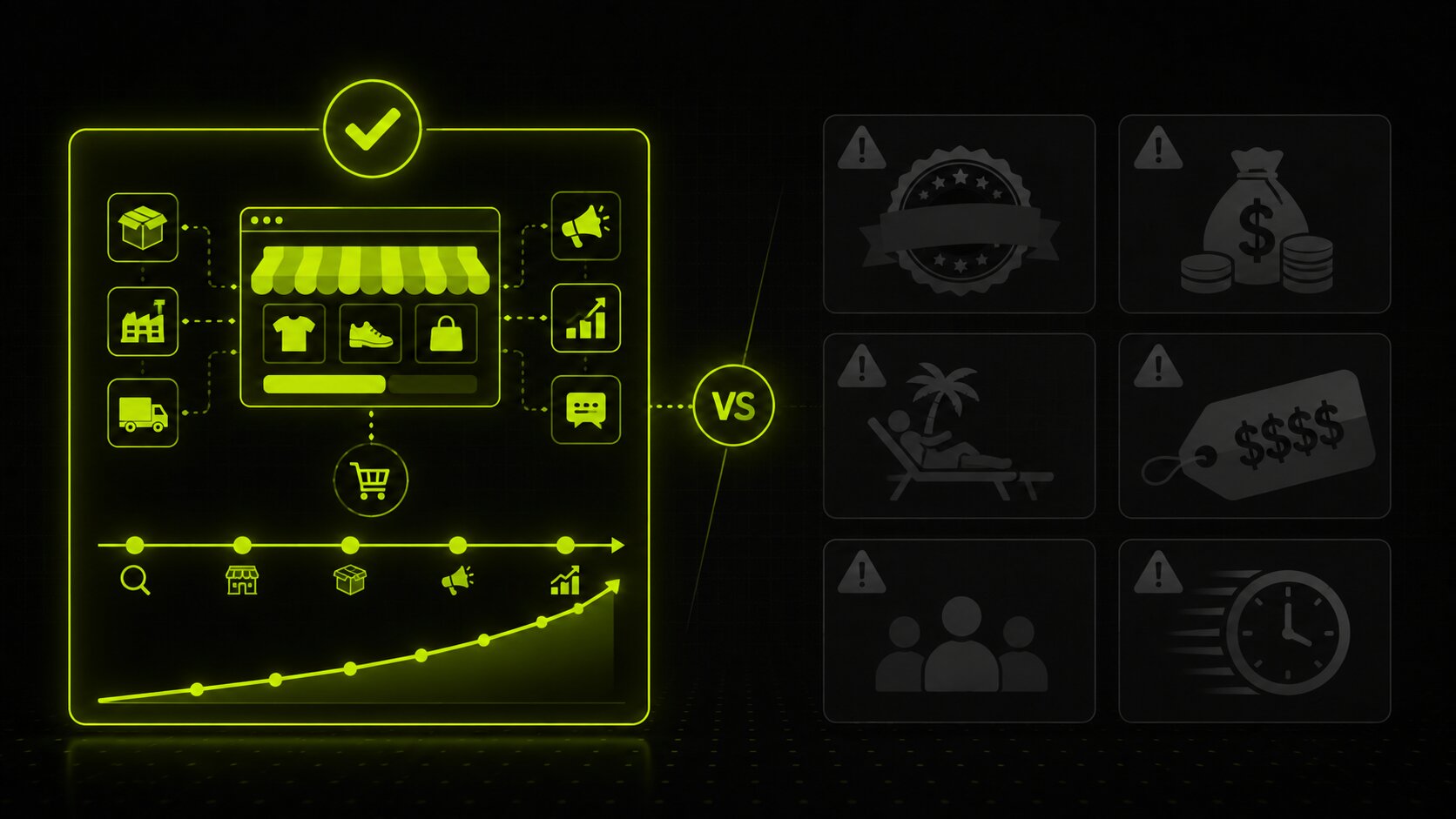
Few corners of ecommerce have a worse reputation than the dropshipping agency space, and most of it is earned. Search for help building a dropshipping business and you will be met with promises of guaranteed profits, passive income, and a hands-off money machine that runs while you sleep. A lot of the operations making those promises are separating hopeful people from their savings, which has tarred an entire category, including the parts of it that are real.
Because dropshipping itself can genuinely work as a business model, the challenge is not deciding whether it is possible, but telling an honest partner apart from a polished scam. The good news is that the warning signs are consistent and easy to learn. Once you know what a legitimate agency sounds like and what a predatory one sounds like, the two are hard to confuse.
Why the category attracts bad actors
Dropshipping draws scams for a simple reason: it is marketed as a way to make money without much money, skill, or effort, which is exactly the promise that attracts people who cannot easily judge whether it is true. Add a low barrier to setting up as an agency and you get a flood of operators who are better at selling the dream than at building a business.
None of this means the model is fake. Real dropshipping businesses make money through ordinary commerce: finding products people want, marketing them well, and running the operation competently. The scams are not a flaw in dropshipping; they are people exploiting its reputation as easy money, and separating the two is the whole task when choosing help.
The red flags that should end the conversation
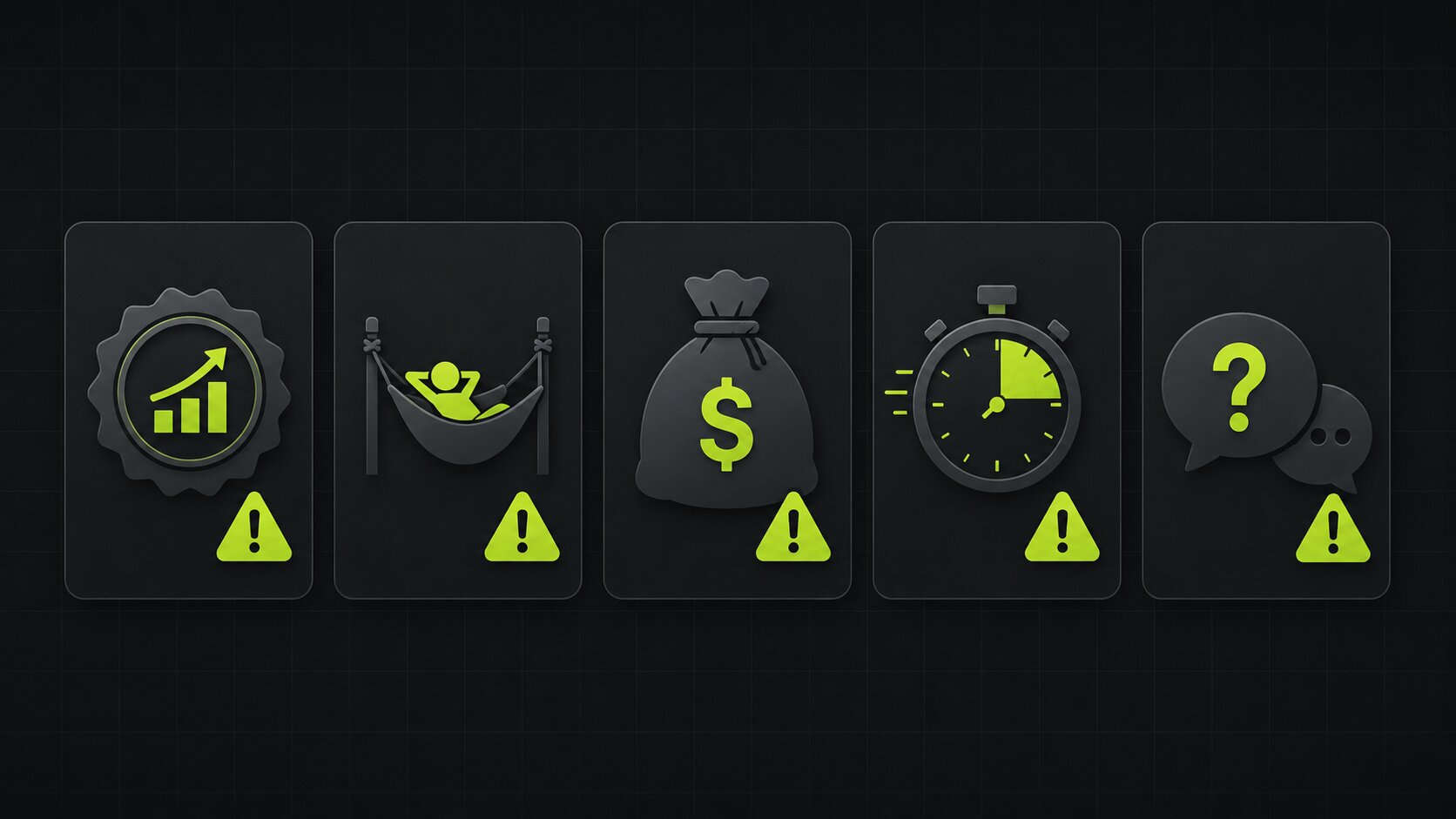
Some signals are reliable enough to act on immediately. Guaranteed profits or income top the list, because no real business can promise that. Passive or hands-off success is the next, since a dropshipping business is a business and businesses need work. High upfront fees before anything is delivered, and pressure to decide quickly before you can think, complete the core set.
None of these requires you to be an expert to spot. They are appeals to hope over judgement, engineered to get a decision before scepticism kicks in. Any one should give you pause, and more than one in the same pitch is your answer. Honest operators do not use these tactics, which is what makes the tactics such a useful filter.
Why the guarantee is the biggest tell
Of all the warning signs, a guarantee of profit is the most revealing, because it is a promise no honest person in commerce would make. Dropshipping is exposed to competition, rising ad costs, supplier problems, and shifting demand, and no agency controls any of those. Anyone who guarantees you will make money is either ignorant of how the business works or counting on you to be.
A legitimate partner talks differently. They describe what is realistic, what the work involves, and what could go wrong, and are comfortable saying success is possible but not assured. That honesty feels less exciting than a guarantee, and it is exactly what should reassure you, because it is what someone actually building a business sounds like.
What a legitimate agency actually does
Strip away the fantasy and a real dropshipping agency does unglamorous, recognisable work. It helps you choose a viable niche and products rather than whatever is trending. It sets up a proper store, connects suppliers who can actually deliver, and puts real marketing behind the products, because a store nobody sees sells nothing. Then it optimises based on what the data shows, the same as any ecommerce operation.
The tell is that everything is framed as building a business that has to earn its sales, not switching on an income stream. A good agency is honest that this takes effort and money and can still fail, and focuses on giving you the best genuine chance rather than a promise. Unexciting competence is what to look for, and what the scams cannot fake for long.
The questions that separate real from fake
A few direct questions expose most of what you need to know. Ask exactly how the store will make money, and listen for a concrete answer about products, margins, and marketing rather than vague talk of profit. Ask what happens if it does not work, and watch whether they can discuss that honestly or deflect. Ask to speak to past clients, and see whether real ones exist.
Then ask the ownership questions, because they matter enormously and scams tend to dodge them. Who owns the store? Who owns the supplier relationships and the accounts? What exactly are you paying for, and when? An honest agency answers all of this plainly. One that gets evasive about money and ownership is telling you something important.
Ownership and how the money works
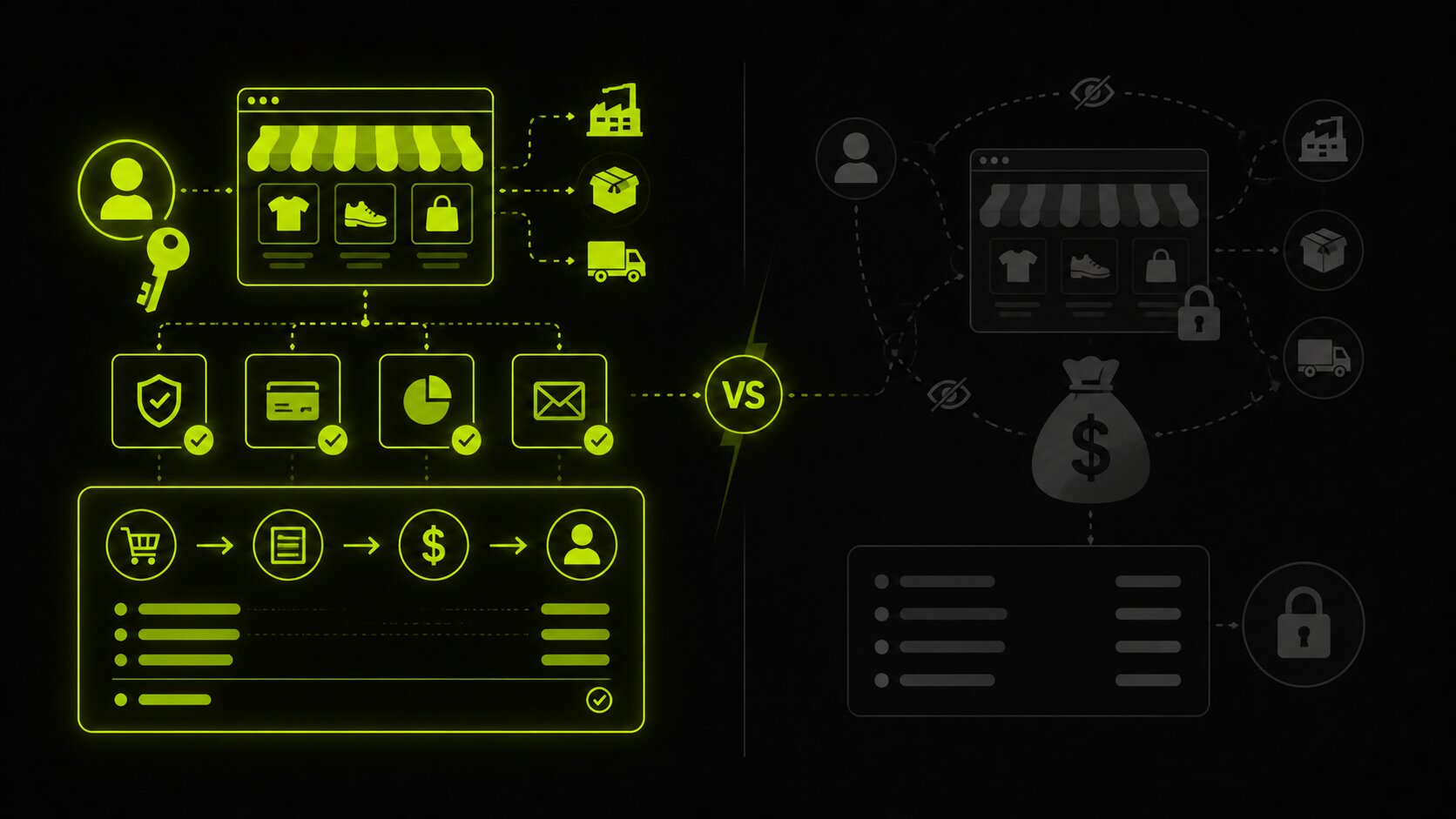
How the deal is structured tells you almost as much as the pitch. You should own your store, your supplier relationships, and your accounts, and you should know exactly what you are paying and for what. Large upfront fees with vague deliverables are a classic pattern, as is any arrangement that leaves you dependent on the agency for access to your own business.
A fair structure aligns the agency with your success rather than front-loading their payment before anything is proven. Transparency about who owns what and how the money flows is one of the clearest signals of a real partner, which is the standard we hold ourselves to in our dropshipping work. If the money structure is confusing or the ownership is unclear, that is usually deliberate.
How we approach it
We treat dropshipping as a real business to build, not a passive-income product to sell. That means honest expectations from the first conversation, a clear explanation of how a store is meant to make money, transparent fees, and you owning your store and accounts throughout. We put genuine effort into niche, products, suppliers, and marketing, and we are candid that it takes work and can still be hard.
That approach is what we bring across more than 500 brands in the US, UK, and Canada. As a global company with our headquarters in Delaware and teams in London and Gurugram, the aim is the same every time: a real store with a real chance, run by a partner who tells you the truth, rather than a fantasy sold with a guarantee.
Where this leaves you
The dropshipping model can work, but the agency space around it is crowded with operators selling a fantasy of guaranteed, passive, effortless income that does not exist. Judge by honesty rather than excitement: treat guarantees and passive-income promises as red flags, be wary of high upfront fees and pressure to sign, insist on clear answers about how the store makes money and who owns it, and favour the unglamorous partner who talks about real work over easy money. Do that and you can find genuine help without getting burned. If you want a straight answer about whether dropshipping fits you, tell us what you are trying to build and we will tell you honestly.
Frequently Asked Questions
What does a dropshipping agency do?
A legitimate one helps you build and run a real ecommerce business on a dropshipping model: choosing a viable niche and products, setting up the store, connecting reliable suppliers, and handling marketing so the store actually sells. The emphasis is on building something that can work, with realistic expectations. That is very different from the 'done-for-you passive income' operations promising a hands-off money machine, which is where most of the category's bad reputation comes from.
Are dropshipping agencies a scam?
Not all of them, but the category attracts a lot of bad actors, so caution is warranted. The scam pattern is recognisable: guaranteed profits, passive income with no effort, high upfront fees, and pressure to decide fast. Legitimate agencies exist and treat dropshipping as a real business that needs real work, honest expectations, and no guarantees. The problem is not the model, which can work, but the operators who sell a fantasy version of it to people who do not know the difference.
What are the red flags of a dropshipping agency?
Guaranteed profits or income, promises of passive or hands-off success, high upfront fees before anything is delivered, pressure to sign quickly, and vague answers about how the business will actually make money. Screenshots of supposed earnings with no way to verify them are another. Any one of these is a warning; several together mean walk away. Real businesses do not come with guarantees, and anyone promising one is selling certainty that does not exist.
Can a dropshipping agency guarantee profits?
No, and anyone who does is lying. Dropshipping is a real business subject to competition, ad costs, supplier issues, and market shifts, none of which any agency controls. A guarantee of profit is not a sign of confidence; it is a sign that someone is telling you what you want to hear to close a sale. An honest agency talks in terms of what is realistic and what the work involves, and is clear that success is possible but never promised.
How do you choose a legitimate dropshipping agency?
Look for honesty over hype. A real one sets realistic expectations, explains exactly how your store will make money, is transparent about fees and who owns what, and does not pressure you to decide on the spot. Ask who owns the store and accounts, what happens if it does not work, and to speak to past clients. Be wary of guarantees, passive-income language, and large upfront payments. The right partner treats it as a business to build together, not a product to sell you.
Want this done for your brand?
Tell us where you are and what you are trying to grow. We will reply with a straight read on your situation and what is worth doing first. No obligation, no lock-in.