
Fine-tuning has a certain gravity to it. It sounds like the serious, grown-up way to use AI: not just prompting a model like everyone else, but training one on your own data so it becomes truly yours. That instinct sends a lot of companies straight to fine-tuning as the answer, often before they have asked whether it is the right question. Many of them spend real money teaching a model to do something a well-written prompt could have handled for free.
Fine-tuning is a genuinely useful tool, but a specific one with real costs and a narrow sweet spot. Used for the right problem it is powerful; used as a default, it is an expensive way to solve what cheaper methods already solve. This piece is about what fine-tuning actually costs, what it actually buys you, and when it is worth reaching for at all.
What fine-tuning actually is
Fine-tuning takes a model that has already been trained on a vast amount of data and trains it a little further on examples of your own, so it leans toward the behaviour you want. You are not building a model from nothing. You are nudging a capable general model to be more reliable at your specific task, or to speak in a particular style, by showing it many examples of the right output.
That framing matters because it sets the limits. Fine-tuning is good at teaching a model how to behave. It is not a way to pour in a library of facts and expect reliable recall. Understanding that boundary separates the companies that get value from fine-tuning from the ones that pay and are disappointed.
What fine-tuning actually buys you
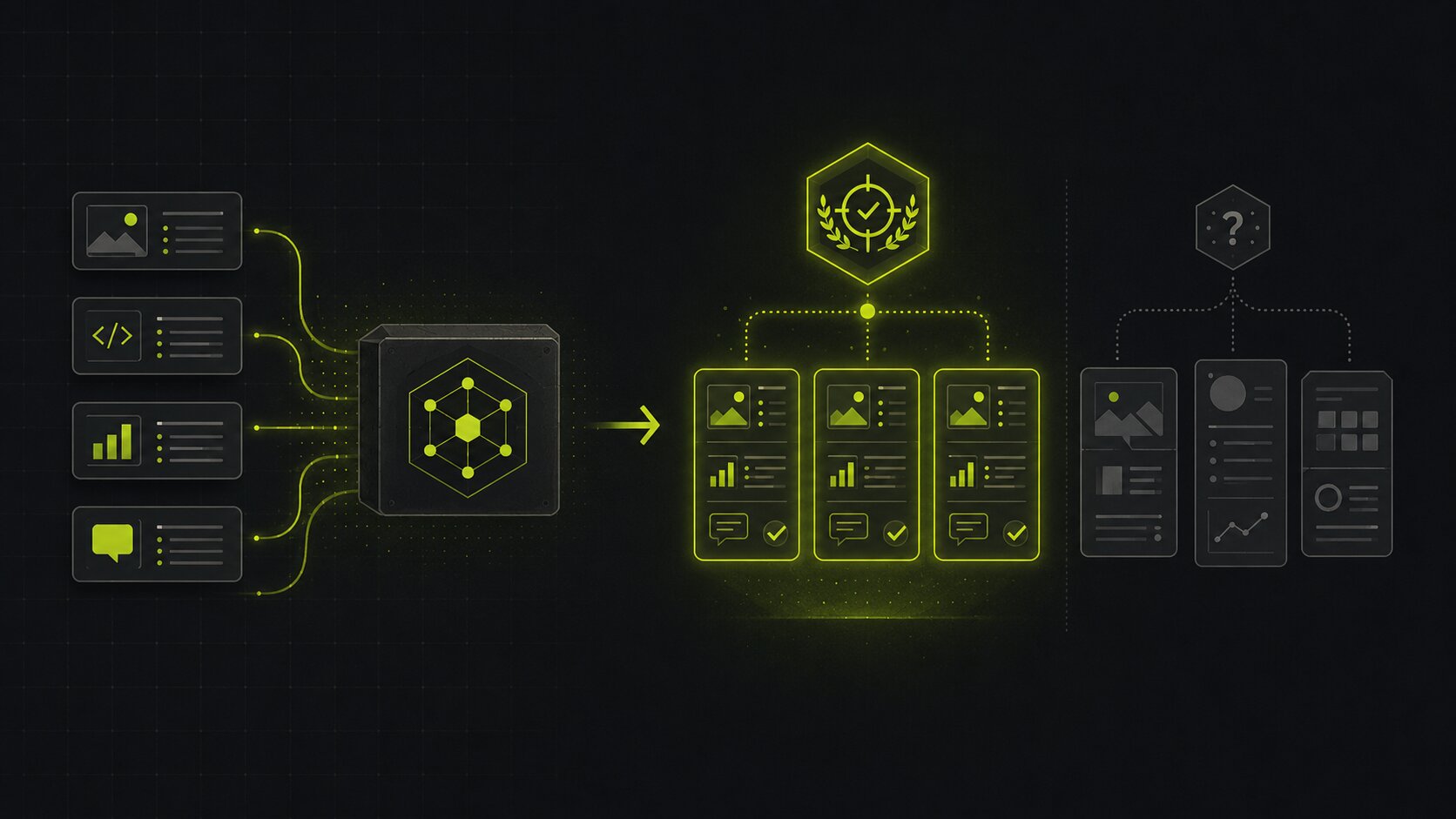
What fine-tuning is genuinely good at is behaviour. If you need a model to answer in a consistent tone, follow a specific format every time, or handle a specialised kind of task the way your experts would, fine-tuning can bake that in far more reliably than instructions alone. It is the difference between asking a model to sound a certain way each time and having a model that simply does.
It also shines where a task is narrow and repeated at scale. A fine-tuned model can become dependable at one particular job in a way a general model prompted case by case struggles to match. When consistency and a specialised skill are the whole point, and you have the examples to teach it, this is where fine-tuning earns its cost.
What it actually costs
The price of fine-tuning is not really the training run, which is often the cheapest part. The real cost is the data. A fine-tuned model is only as good as the examples it learns from, and preparing enough clean, well-labelled, representative data is slow, skilled work that most teams underestimate badly. Feed it mediocre data and you get a model that is confidently mediocre.
Then there is evaluation and upkeep. You have to prove the fine-tuned model is actually better, which takes real testing, and maintain it as your needs shift and the base models underneath keep improving. A fine-tuned model is a standing commitment, not a one-off purchase, and counting only the training bill is how the true cost stays hidden.
What fine-tuning does not fix
Two very common goals are the wrong reasons to fine-tune. The first is knowledge. If the problem is that the model does not know your latest documents, prices, or policies, fine-tuning is a poor fix, because it is unreliable at storing facts and out of date the moment your information changes. The second is simple behaviour that a clearer prompt would have produced anyway.
Reaching for fine-tuning to solve either is the most common expensive mistake here. It is a heavy tool applied to a problem a lighter one handles better, which is why the honest first question is never how do we fine-tune, but what is actually going wrong and what is the cheapest thing that fixes it.
Try prompting and retrieval first
There is a sensible order of operations, and fine-tuning sits at the end of it. Start with good prompting, which solves far more than people expect once it is done carefully. When the gap is missing or changing knowledge, add retrieval-augmented generation, which fetches the right information and feeds it into the prompt so the model answers from current, specific context without any training at all.
Most business problems are solved somewhere on that first stretch of the ladder, at a fraction of the cost and with far more flexibility, since a prompt or retrieval source can change in minutes where a fine-tuned model has to be retrained. Only when they genuinely cannot produce the consistent behaviour you need does fine-tuning become the reasonable next step.
When fine-tuning is worth it
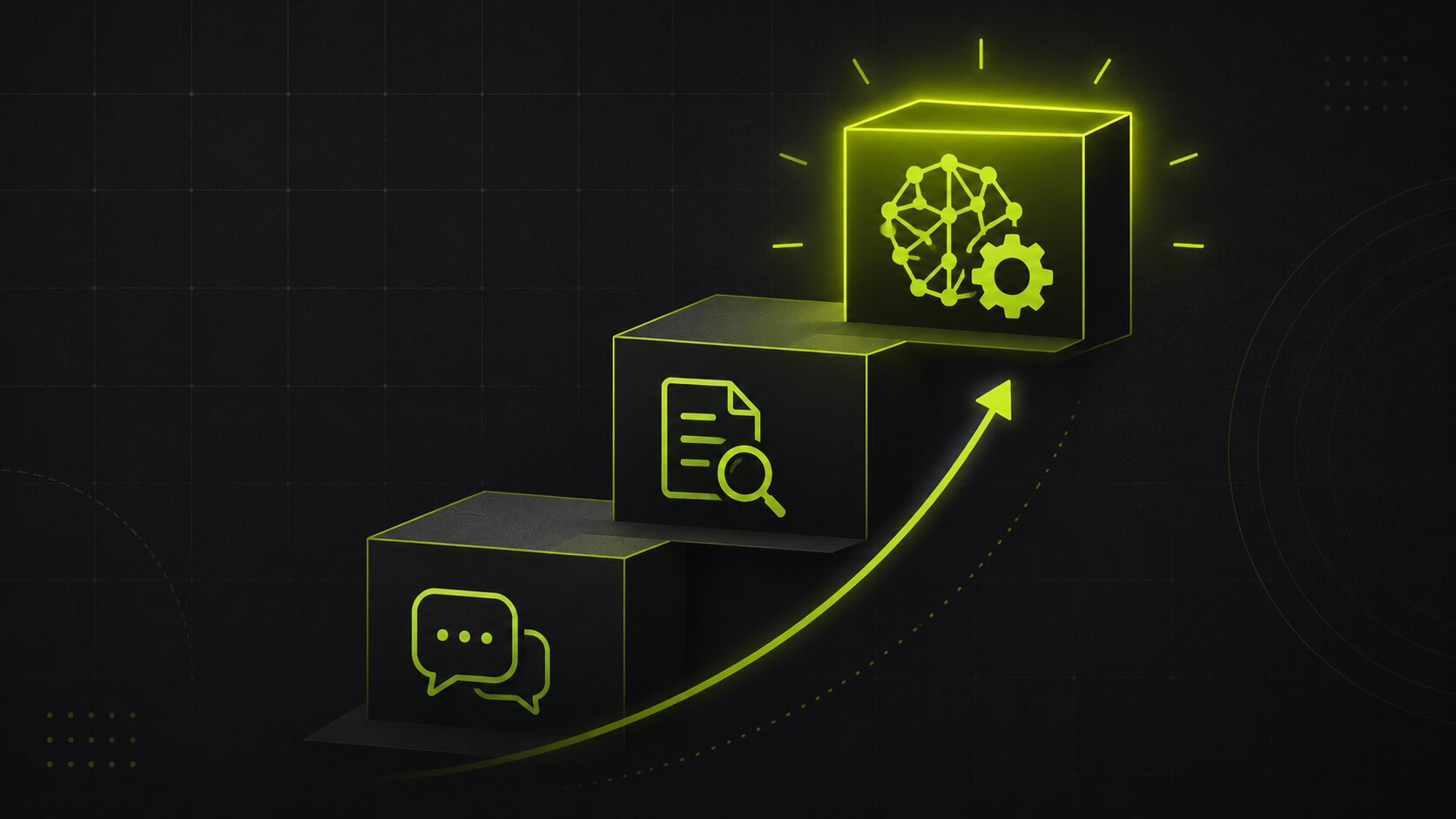
None of this means fine-tuning is rarely right, only that it is specifically right. It earns its cost when you need behaviour a general model cannot be prompted into consistently, when that need is central and repeated enough that the investment pays back, and when you can supply the quality data and ongoing evaluation it demands. A specialised, high-volume task with a clear standard of correct output is exactly its sweet spot.
When those conditions line up, fine-tuning is not an indulgence but the right engineering choice, and it is the kind of judgement we bring to custom LLM and fine-tuning work: recommending it where it genuinely pays and, just as often, talking a client out of it where a prompt or a retrieval layer will do the job for far less.
How we approach it
We start from the problem, not the technique. We work out what behaviour you actually need, try to reach it with prompting and retrieval first because they are cheaper and more flexible, and reserve fine-tuning for cases that genuinely require it. When it is the right call, we treat data and evaluation as the real work, because that decides whether a fine-tuned model is an asset or an expensive disappointment.
That judgement is what we bring across more than 500 brands in the US, UK, and Canada. As a global company with our headquarters in Delaware and teams in London and Gurugram, the aim is the same every time: the approach that fits the problem and the economics, whether that is a clever prompt, a retrieval layer, or a genuinely fine-tuned model earning its keep.
Where this leaves you
Fine-tuning an LLM buys you consistent, specialised behaviour, and it costs real data, evaluation, and upkeep to get there. It does not reliably add knowledge, and it is the wrong tool for anything a good prompt or a retrieval layer already handles. Start with prompting, add retrieval when the gap is knowledge, and reach for fine-tuning only when you need behaviour those cannot produce and can support what it demands. If you are weighing whether to fine-tune, tell us the behaviour you are trying to get and we will tell you honestly whether it is the answer or an expensive detour.
Frequently Asked Questions
What is fine-tuning an LLM?
Fine-tuning is taking an existing, already-trained language model and training it further on your own examples so it performs better on a specific task or in a particular style. You are not building a model from scratch; you are adjusting one that already works, teaching it patterns from your data. Done well, it makes a general model behave more reliably for your use case, without the enormous cost of training from the ground up.
How much does it cost to fine-tune an LLM?
It varies with the model, the amount and quality of data, and how much expertise the work requires, so any number quoted before those are known is a guess. The cost people underestimate is not the training run itself but everything around it: preparing clean, well-labelled data, evaluating whether the fine-tuned model is actually better, and maintaining it as your needs and the base models change. Treat fine-tuning as an ongoing commitment to data and evaluation, not a one-time training bill.
When should you fine-tune vs use prompting or RAG?
Start with the cheaper options and only escalate when they fall short. Good prompting solves a surprising amount on its own. When the model lacks specific or current knowledge, retrieval-augmented generation, which feeds relevant information into the prompt, is usually the right fix rather than fine-tuning. Fine-tuning earns its place when you need consistent behaviour, tone, or format that prompting cannot reliably produce, or a specialised skill the base model lacks. Reach for it last, not first.
Does fine-tuning add new knowledge to a model?
Not reliably, and this is one of the most common misunderstandings. Fine-tuning is good at teaching a model how to behave, a style, a format, a pattern of responses, but it is a poor and expensive way to give it new facts. If your goal is for the model to know your latest documents, policies, or data, retrieval-augmented generation is the better tool, because it supplies that information at the moment of the question. Use fine-tuning to shape behaviour, not to store knowledge.
Is fine-tuning worth it for most companies?
Often not, at least not as a first step. Most needs are met by strong prompting or by retrieval that feeds the model the right context, both cheaper and faster to change. Fine-tuning becomes worth it when you have a specific, high-value case that genuinely needs behaviour a general model cannot be prompted into reliably, and when you can support the data and evaluation it requires. For a narrow set of problems it is the right call; for most, the cheaper options get you there.
Want this done for your brand?
Tell us where you are and what you are trying to grow. We will reply with a straight read on your situation and what is worth doing first. No obligation, no lock-in.