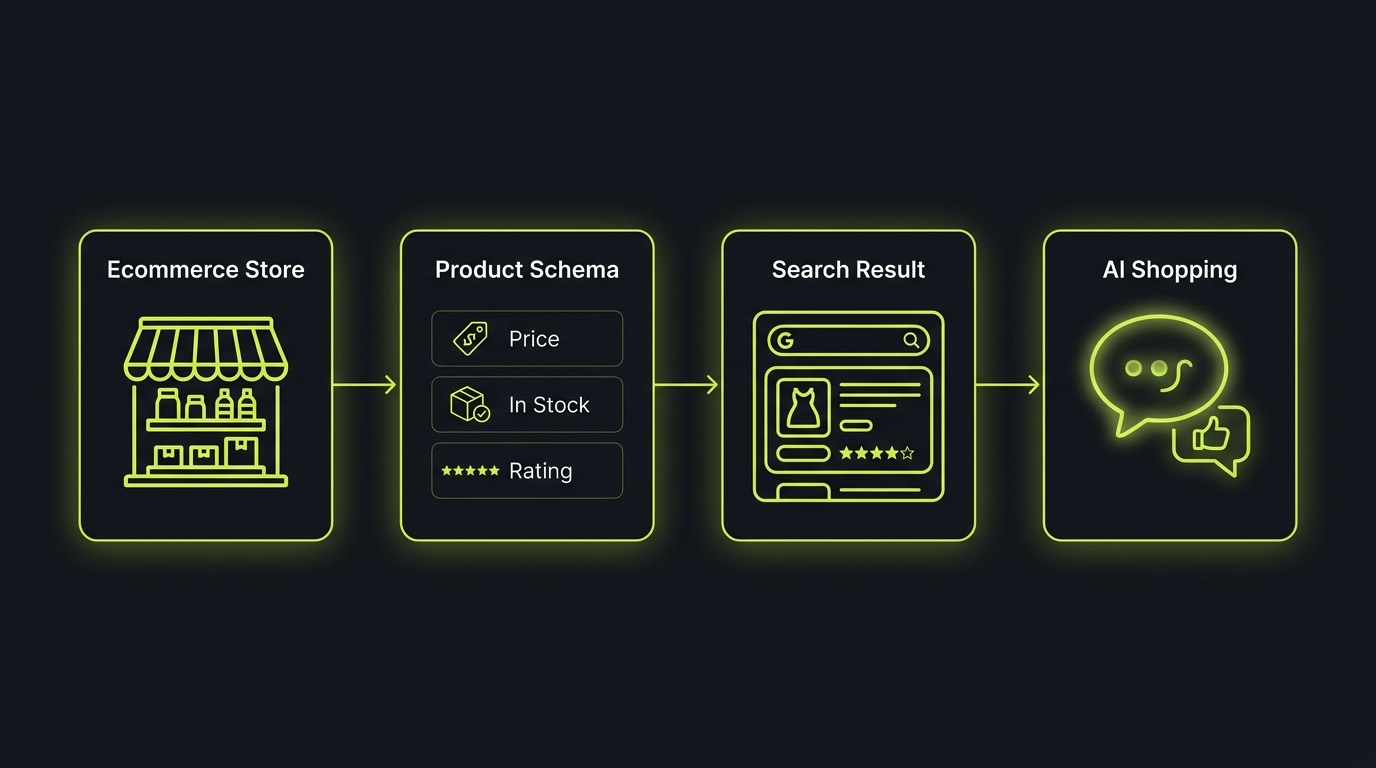
A lot of SEO advice was written with a simple website in mind: a handful of pages, each one made on purpose by a person who decided it should exist. Choose the keyword, write the page, earn the ranking. That model works reasonably well for a blog or a small brochure site. It falls apart the moment you point it at a real online store.
A store is not a few dozen hand-made pages. It is a catalogue, often thousands of products and categories generated from a database, multiplied further by colours, sizes, filters, and sort orders. Pages appear when stock arrives and vanish when it sells out. The same jacket exists in nine variants that look almost identical to a search engine. None of this happens on a content site, and all of it changes what good search work looks like. Ecommerce SEO is the practice of making a large, shifting catalogue legible to search engines and the AI tools shoppers increasingly lean on, so the right products surface when someone is ready to spend.
Why ecommerce SEO is its own discipline
The clearest way to see the difference is to picture what a search engine has to deal with on a store it has never crawled before. It arrives at a homepage, follows links into categories, and quickly finds itself in a maze. A single category of shoes might expose hundreds of combinations once you account for filtering by size, colour, brand, and price, each combination sitting at its own web address. Most of those addresses lead to thin, near-identical pages that no shopper ever asked for. Left alone, the engine can spend its limited attention crawling clutter and never reach the pages that actually sell.
That is the work nobody sees and everybody needs. A specialist controls which of those filtered and sorted pages search engines should bother with, collapses the duplicates that variants create, and makes sure the crawler spends its time on category and product pages rather than on an endless grid of combinations. Get this wrong and even a beautifully designed store can be largely invisible, not because the products are bad but because the engine never found the pages worth ranking.
Category pages are where the money usually is
It is tempting to think the product page is the star, since that is where the buying happens. In search terms, the category page often does more work. People tend to search for a type of thing before they search for a specific model, so the queries with real volume and clear buying intent usually point at a category rather than at one item. A shopper looks for running shoes, waterproof jackets, or a standing desk long before they know exactly which one they want.
That makes a well-built category page one of the highest-return assets a store has. It can rank for a broad commercial term, give the shopper a sense of the range, and then hand them off to the exact product that fits. A store that lavishes attention on individual product descriptions while leaving its category pages thin and generic is optimising the wrong layer. The categories are the front door for the searches that matter most, and a focused approach to ecommerce SEO treats them that way.
Product pages, structured data, and trust
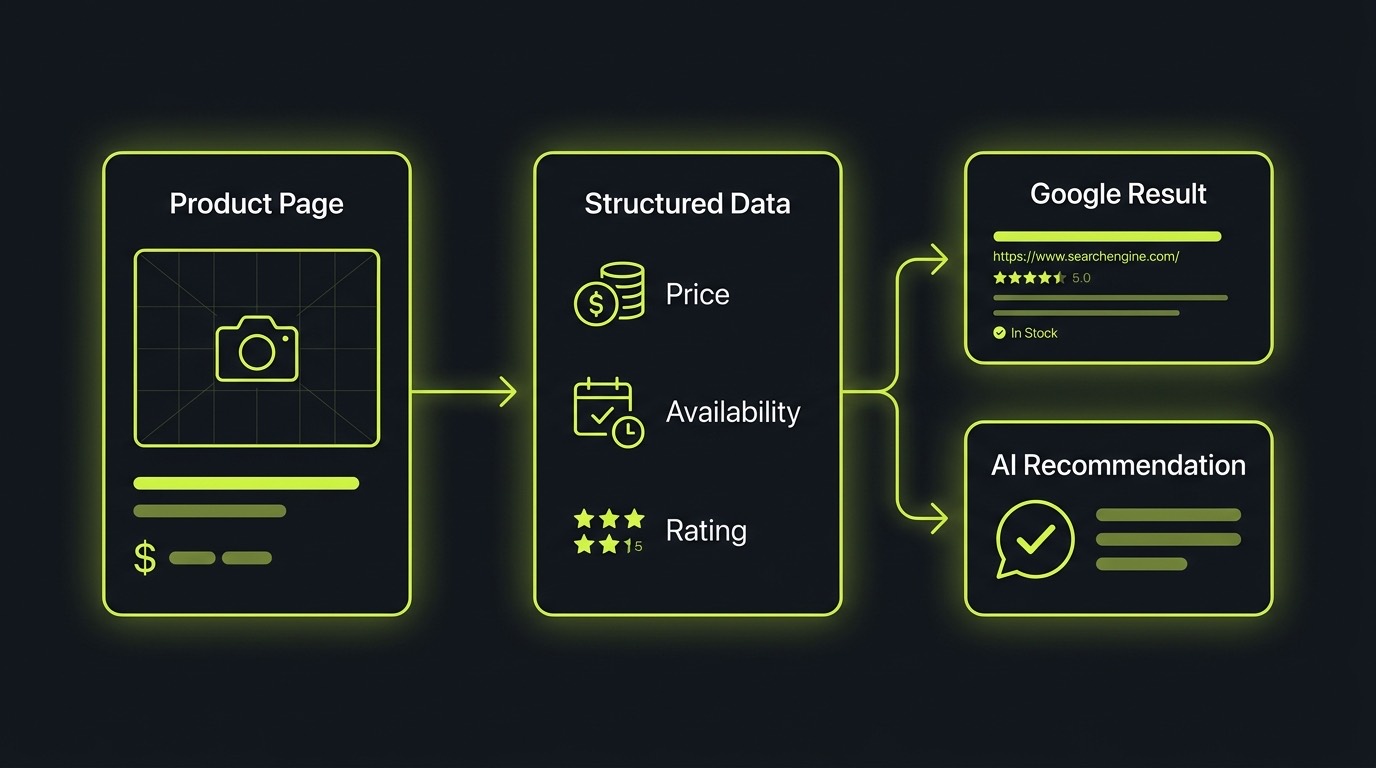
Product pages still carry their share, especially for branded and model-specific searches where someone already knows what they want. The difference between a product page that ranks and one that does not often comes down to two things: whether it gives a search engine a clean, complete picture of the item, and whether a real person finds it trustworthy.
This is where structured data earns its keep. Marking up a product with its price, availability, and genuine review ratings lets a search engine show those details directly in the result, which can make a listing stand out before anyone clicks. The same machine-readable clarity that helps a search engine helps an AI shopping assistant, which needs reliable product facts to recommend anything with confidence. Underneath all of it sits trust: honest descriptions, real specifications, and reviews that have not been faked. Search systems and shoppers are both getting better at spotting a store that inflates itself, and neither rewards it for long.
The store has to be technically sound
None of the strategy survives a store that engines and shoppers struggle to use. The technical layer in ecommerce is heavier than on most sites because there is simply more of it. Pages need to load quickly even when they are packed with images and scripts, because a slow store loses both rankings and sales. The structure has to let a crawler reach everything important without wading through duplicate addresses. Out-of-stock and discontinued products need a deliberate plan rather than a trail of dead ends, and variants need handling so the same item does not compete against itself.
Whether a store runs on a hosted platform or a custom build changes the specifics but not the principles, and the right Shopify development choices early on can prevent a great deal of this debt from ever forming. The unglamorous foundation is what lets everything above it work. There is no clever content move that rescues a store a search engine cannot crawl cleanly.
SEO is one channel, not the whole store
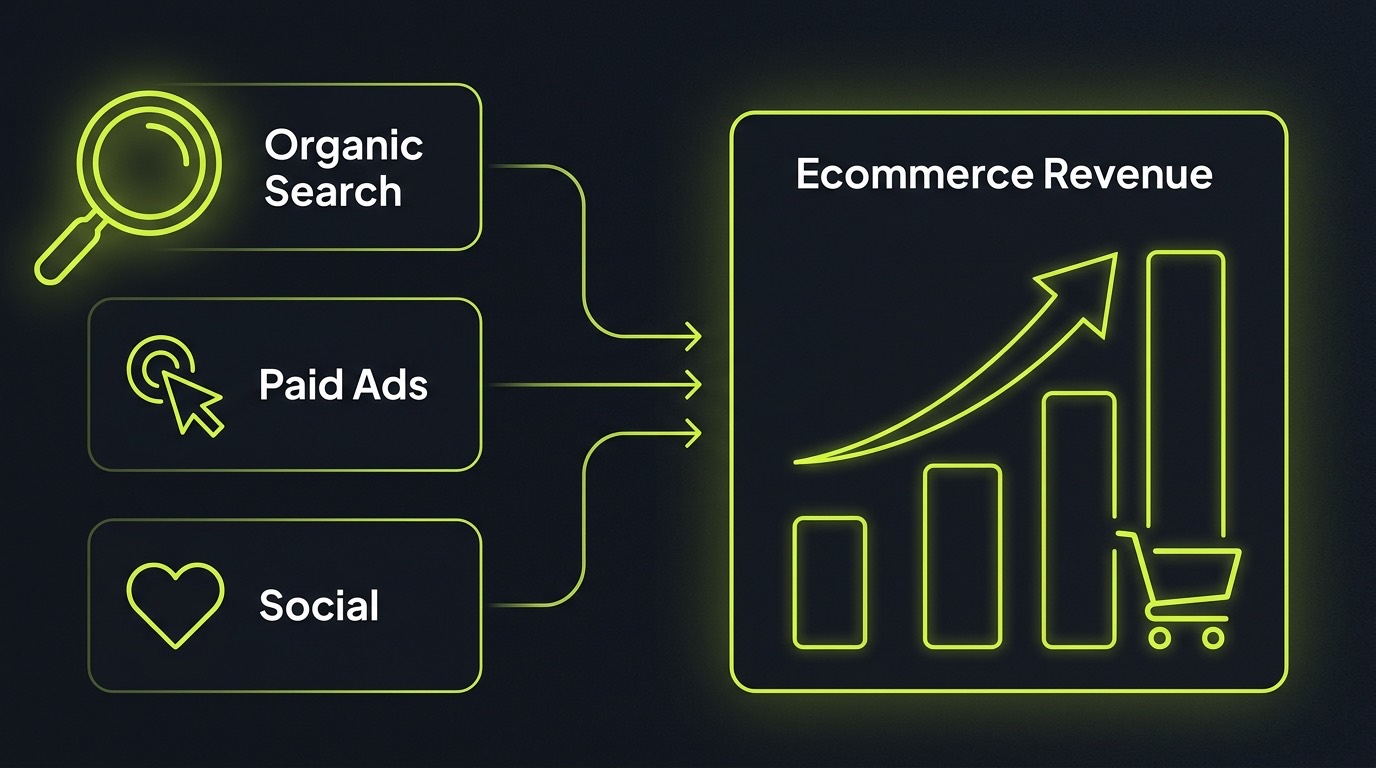
It also helps to be honest about where SEO sits. For most stores it is one of several channels, and it works best when it is not asked to do everything alone. Organic search is patient and durable: it builds an asset that keeps returning visitors without paying for each click, which is why it is worth the effort. But it rarely moves as fast as paid channels, and a healthy store usually runs them together, letting search carry the steady demand while other channels handle launches and reach.
That is why the better agencies think past rankings to the wider picture of how a store grows, the same instinct that drives sound ecommerce marketing. The question is never simply how high a page ranks. It is how much profitable revenue the channel produces, and how it fits alongside everything else the store is doing to bring customers in.
Measure revenue, not sessions
This is where ecommerce SEO quietly goes wrong even when the charts look healthy. Traffic can climb while sales stay flat, because the visitors arriving are not the ones who buy, or because they land on pages that do not lead anywhere they can purchase. If the only number anyone reports is sessions, a store can spend a long time celebrating a graph that never reaches the checkout.
Tie the work to the business instead. Watch organic revenue and the conversion rate of organic visitors, not just how many of them show up. Track rankings on the commercial category and product terms that actually lead to sales rather than on broad terms that flatter a report. Pay attention to which pages earn their place and which quietly drain crawl budget without ever contributing. The discipline of connecting search effort to money is the same one behind any serious approach to digital marketing, and a store that holds itself to it tends to spend its budget where it works.
How to choose an ecommerce SEO agency
If you are weighing up partners, the first conversation tells you most of what you need. A firm that opens by asking about your catalogue, your margins, and your best-selling categories is thinking the right way, because a store's economics decide where SEO effort actually pays off. One that opens with a list of keywords it can rank you for, without understanding what you sell or how you make money, is offering a generic playbook with a store-shaped label on it.
Ask how it handles the problems that are specific to large catalogues: faceted navigation, variant duplication, out-of-stock pages, and the crawl waste they create. Vague answers usually mean limited experience with real stores. Ask how it defines success and listen for whether revenue appears in the answer or only traffic. Treat guaranteed rankings and fixed timelines as warnings rather than reassurances, since no agency controls the search systems and anyone claiming otherwise is managing your expectations rather than your results.
Where this leaves you
Ecommerce SEO is not ordinary SEO at a larger scale. It is a different practice built around a catalogue that is big, repetitive, and always changing, where the technical foundation carries more weight, the category pages hold the most valuable searches, and structured data and genuine trust decide how products surface in both search results and AI recommendations. Get the foundation right, lead with the categories where shoppers are closest to buying, make every product legible and trustworthy, and measure the effort by the revenue it brings rather than the visitors it counts.
If you would rather have a team handle it, that is the work we do, and it sits naturally alongside our broader ecommerce and marketing services. Tell us what you sell and how your store is built, and we will tell you, plainly, where your search presence stands and what is worth fixing first.
Frequently asked questions
What does an ecommerce SEO agency actually do?
An ecommerce SEO agency works on the parts of an online store that decide whether it shows up when someone is ready to buy. That covers the technical health of a large catalogue, the structure that helps search engines and AI assistants understand thousands of products, the category and product pages that carry most of the commercial intent, and the structured data that lets a listing show price, availability, and reviews directly in results. The point is to turn search into a reliable source of sales, not just to raise a visitor count, so the work and the reporting both lead back to revenue.
How is ecommerce SEO different from regular SEO?
The difference is scale and intent. A typical site has a few dozen pages a human wrote on purpose. A store can have thousands of product and category pages generated from a catalogue, which creates problems a blog never faces: near-duplicate variants, filtered URLs that multiply endlessly, out-of-stock items, and pages that appear and disappear as inventory changes. On top of that, shoppers searching for a product are usually closer to buying than someone reading an article, so the stakes on a category or product page are higher. An agency that treats a store like a content site tends to miss both the risks and the opportunities.
Why do category pages matter more than product pages for SEO?
Because category pages target the way people actually search. Most shoppers look for a type of thing before a specific model, so the searches with real volume and buying intent tend to map to categories rather than to one product. A well-built category page can rank for a broad commercial term and then send visitors on to the exact item they want. Product pages still matter, especially for branded and model-specific searches, but a store that pours all its effort into individual products and neglects its category structure usually leaves its most valuable rankings on the table.
How long does ecommerce SEO take to show results?
It depends on the size and current health of the store, the competitiveness of the category, and how much technical debt has built up. Fixing crawl and indexing problems can change what search engines see fairly soon, while rankings on competitive commercial terms and the authority behind them build more gradually. Anyone offering a fixed date for a given ranking is guessing, because no agency controls the search systems. The honest signal is direction: more of the right pages indexed, movement on commercial keywords, and organic traffic that converts rather than just grows.
Does ecommerce SEO still matter when shoppers buy through AI assistants?
It matters more, not less. When someone asks an AI assistant to recommend a product, the assistant draws on the same kind of structured, well-organised, trustworthy information that search engines reward. A store with clean product data, clear specifications, genuine reviews, and a structure that is easy to parse is far more likely to be surfaced and cited than one that hides its details behind scripts or scatters them inconsistently. The fundamentals of good ecommerce SEO are what make a catalogue legible to both search engines and AI shopping tools.
How do I choose an ecommerce SEO agency?
Look for a firm that asks about your catalogue, your margins, and your best-selling categories before it talks about rankings, because a store's economics decide where SEO effort actually pays. Ask how it handles the problems specific to large catalogues, such as faceted navigation, variant duplication, and out-of-stock pages, since vague answers usually mean limited experience. Make sure success is measured in revenue and qualified traffic rather than sessions alone, and treat guaranteed rankings or fixed timelines as warning signs, because the channel does not offer that kind of certainty.
Want this done for your brand?
Tell us where you are and what you are trying to grow. We will reply with a straight read on your situation and what is worth doing first. No obligation, no lock-in.