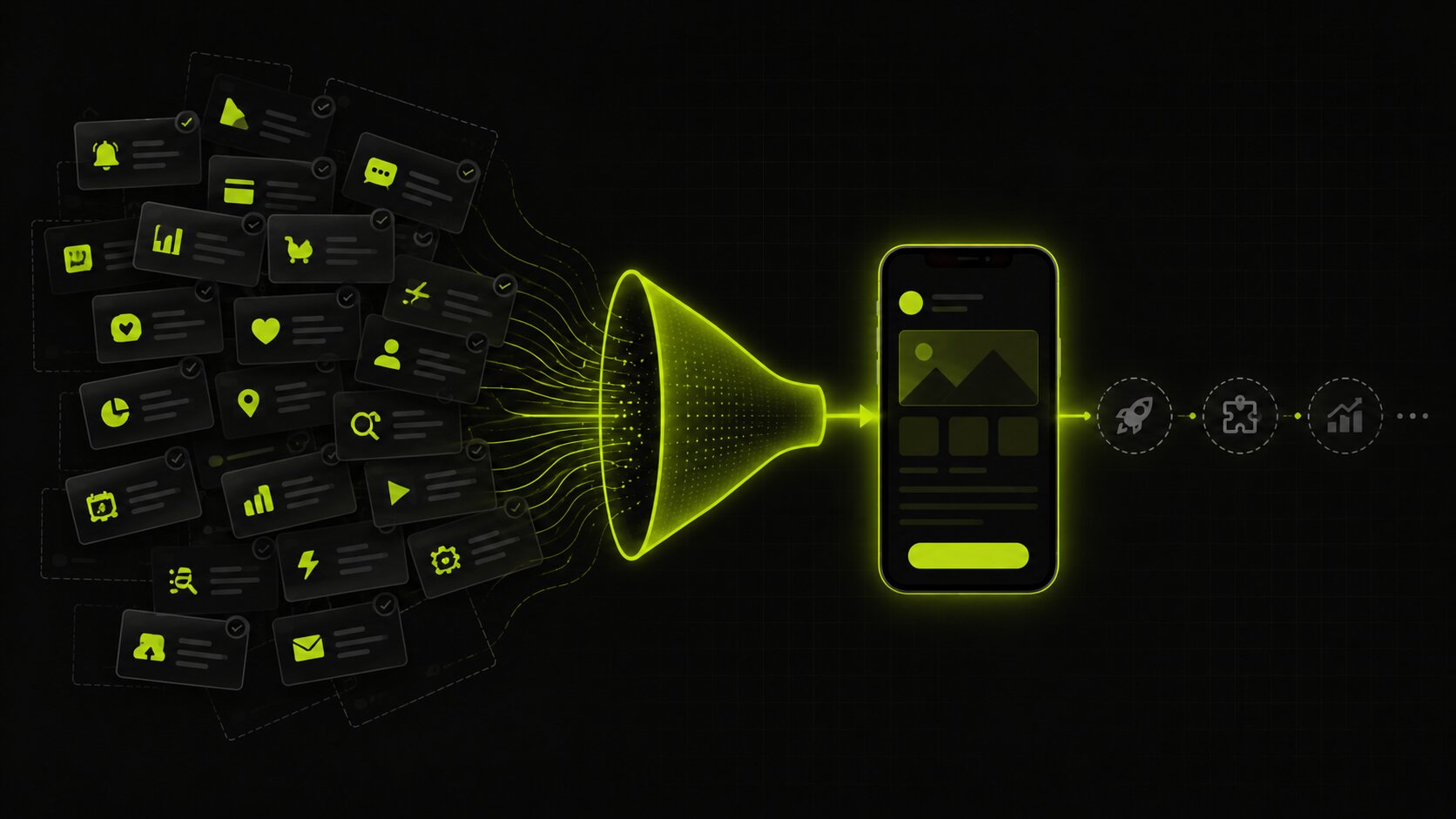
When a custom app project goes wrong, people usually blame the build. The developers were too slow, the technology was wrong, something broke. Occasionally that is true. Far more often, the project was doomed before a line of code was written, by how it was scoped. An app that never ships, or ships years late and over budget, is almost always a scoping failure wearing a technical disguise.
Custom software is powerful precisely because it can be anything, and that is also its trap. With no shelf to limit you, the temptation is to build everything you can imagine, all at once, described in a document vague enough that everyone pictures something different. Scoping is the discipline that turns that open field into a build that actually reaches users. Get it right and the code is the easy part.
Why scope decides whether an app ships
A custom build has no natural edges. A ready-made product does one defined thing; a custom app does whatever you decide, which means someone has to decide, clearly, or the project expands until it collapses under its own weight. The projects that ship are the ones where somebody drew a firm line around what this build is and, just as importantly, what it is not.
This is why two teams with equal talent can have wildly different outcomes. One scoped the work into something concrete and shipped it; the other left the scope open, chased every good idea, and is still building. The difference was not skill or technology, but the decisions made about what to build and when.
Start from the problem, not the feature list
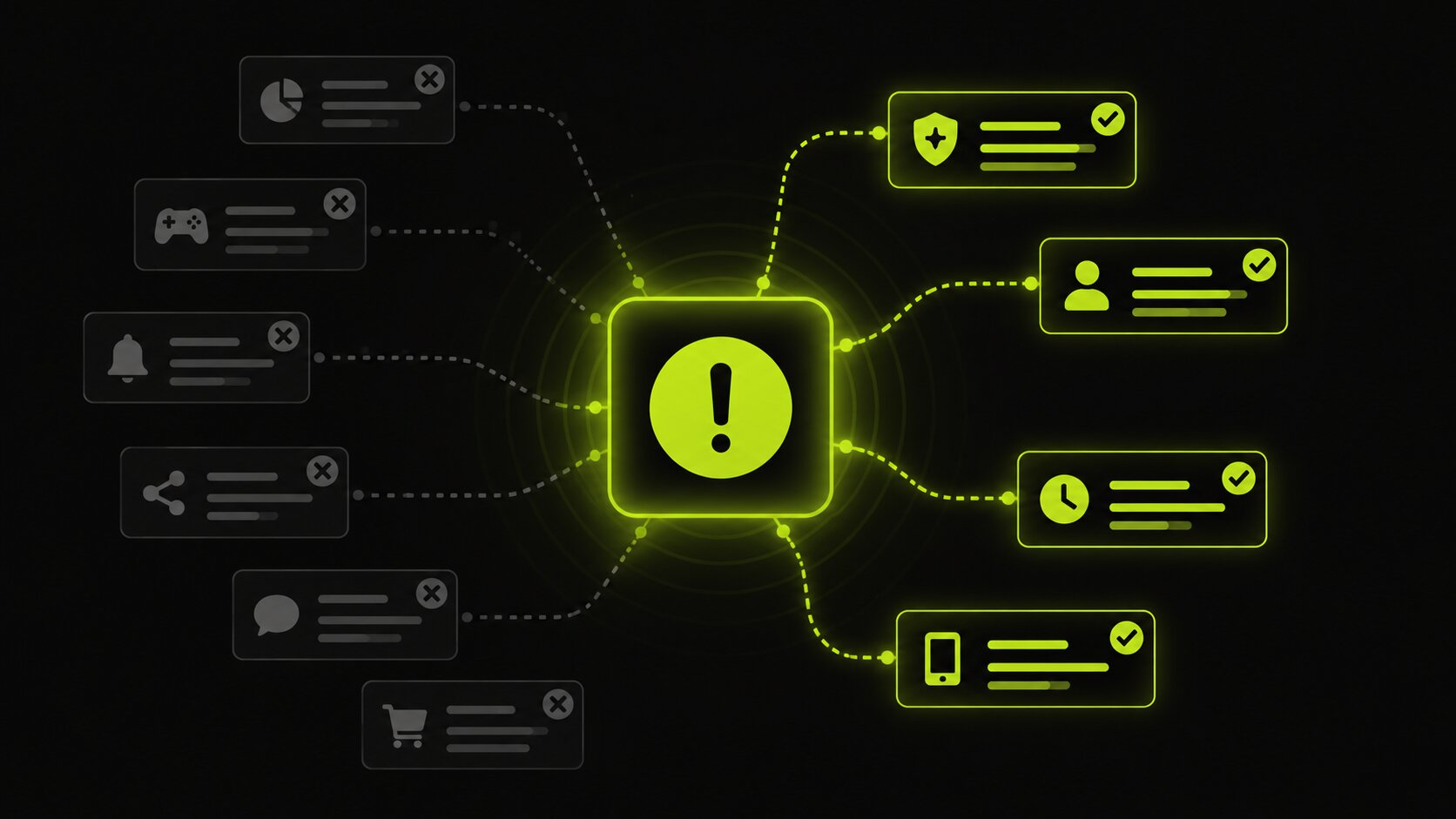
Most scoping goes wrong at the first step, when a project begins as a list of features rather than a clear statement of the problem. Features are easy to add and hard to argue against in the abstract, so a feature-led project grows without limit. A problem-led one has a natural test for every idea: does this actually help solve the problem we are here to solve?
Start by defining the problem precisely and who it is for. Then every proposed feature has to earn its place by serving that problem, and the ones that do not fall away on their own. This single shift, from what could we build to what problem must this solve, prevents more wasted budget than any other decision in a custom project.
Build the smallest version that is actually useful
Once the problem is clear, the instinct is still to build the complete, polished vision before launching. That instinct is expensive. The better path is to build the smallest version that genuinely solves the core problem and can go live, then learn from real use. This is the idea behind a minimum viable product, and it is about focus, not cutting corners.
Shipping a focused first version does two things. It gets a working product to users quickly, so you learn what they actually need instead of guessing, and it protects the budget by proving the core idea before you invest in every extra. Almost every assumption about what users want will be partly wrong, and a smaller launch is the cheapest way to find out where.
Write requirements people can build from
A surprising amount of failure traces back to requirements vague enough that everyone read them differently. A line like "users can manage their account" hides a dozen decisions, and if they are not made up front, they get made inconsistently mid-build, or discovered as expensive surprises near the end. Requirements are where scope becomes real.
Good requirements are specific enough that a developer, a designer, and the client all picture the same thing. They describe what the app should do concretely, cover the awkward edge cases people prefer to ignore, and leave little room for the kind of assumption that turns into rework. Time spent making requirements clear is repaid many times over in work that does not have to be done twice.
Scope creep and how to manage it
Even a well-scoped project faces the steady pressure of scope creep, the quiet accumulation of new features and small additions after the plan is set. Each request is reasonable on its own. Together they are how a three-month build becomes a year and a budget doubles, usually without anyone deciding it should.
Managing it is not about refusing every change, because real learning during a build should influence it. It is about having a clear scope to change against and a deliberate way to weigh each request: what it costs, what it delays, and whether it belongs now or in a later phase. When trade-offs are made visible, most "quick additions" reveal themselves as things that can wait, and the ones that truly matter get room by pushing something else out.
Ship in phases, not one big bang
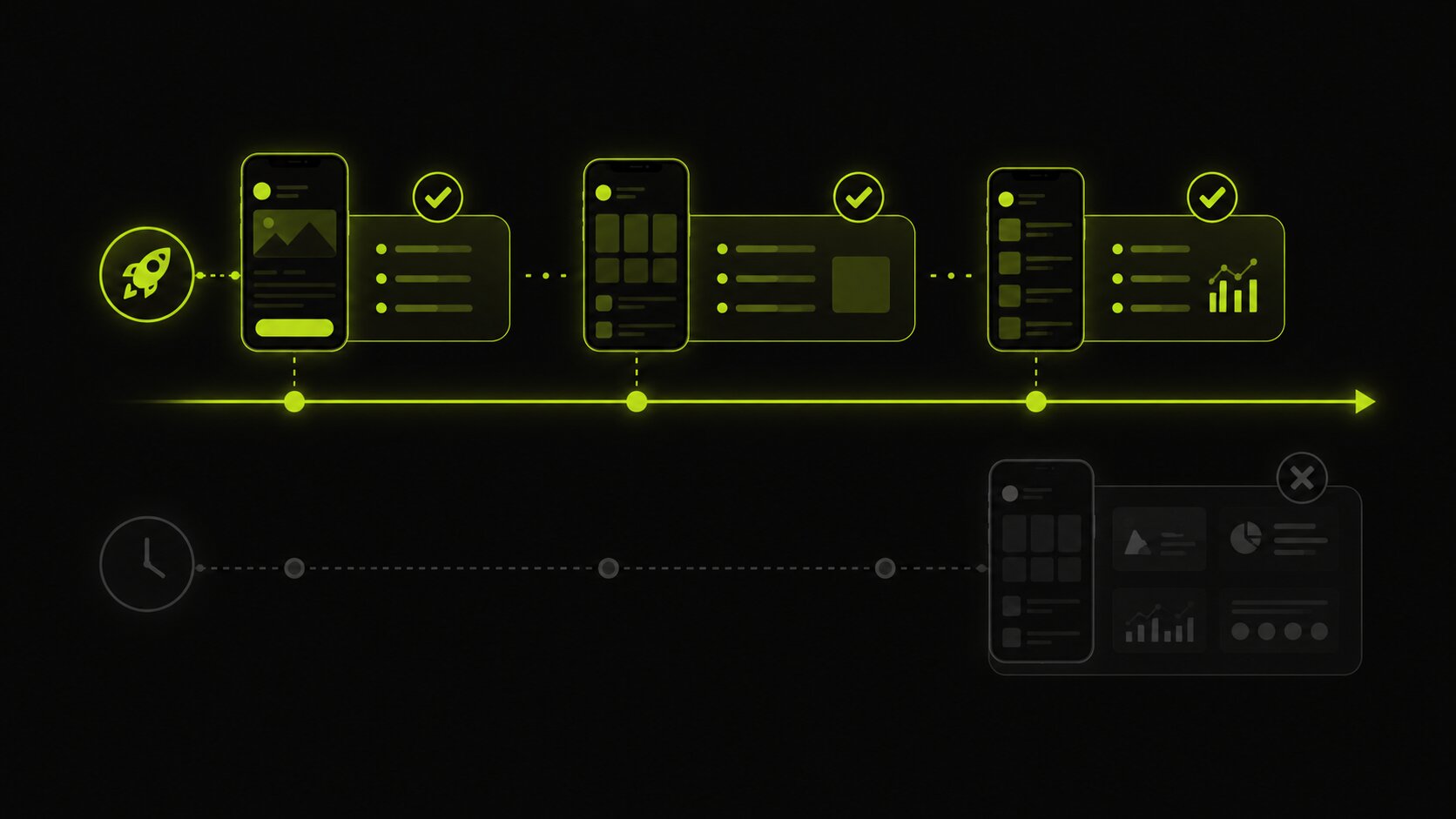
The riskiest way to build custom software is to disappear for a long time and reappear with everything at once. A phased approach, where a useful core ships first and further capability follows in deliberate stages, lowers the risk at every step. You get value into users' hands sooner, you catch problems while they are small, and you can adjust the plan based on what real usage teaches you.
Phasing also keeps a project honest, because each stage has to actually ship rather than living forever in a plan. That momentum is a large part of how we approach custom application development, since a build that reaches users in stages almost always beats the grand launch that keeps slipping over the horizon.
How we scope a build
We start by pinning down the problem and who it serves, then shape the smallest version that solves it and can go live. We write requirements concrete enough to build from, agree a clear scope, and treat changes as deliberate trade-offs rather than free additions. Then we deliver in phases, so something real is in users' hands early and the plan can respond to what they teach us.
That discipline is what we bring across more than 500 brands in the US, UK, and Canada. As a global company with our headquarters in Delaware and teams in London and Gurugram, the aim is the same every time: a custom app that actually ships and earns its keep, not an ambitious plan that never quite becomes a product.
Where this leaves you
Custom app development lives or dies on scope long before it depends on code. Start from the problem rather than a feature list, build the smallest genuinely useful version first, write requirements clear enough to build from, manage scope creep as visible trade-offs, and ship in phases instead of betting everything on one launch. Do that and a custom build becomes a product that reaches users and grows, rather than a cautionary tale about a project that was always almost done. If you are planning a build, tell us the problem you are trying to solve and we will help you scope a version that ships.
Frequently Asked Questions
What is scoping in custom app development?
Scoping is deciding what a custom app will and will not do before you build it, and in what order. It turns a vague ambition into a concrete plan: the problem being solved, the features that matter, what is left out for now, and how the work will be delivered. Good scoping is the difference between a build that ships and one that drifts, because most custom app problems are not coding problems but scope decisions that were never made clearly.
Why do custom app projects fail?
More often on scope than on code. Projects stall when nobody defined the problem tightly, when the feature list keeps growing, when requirements are vague enough that everyone imagines something different, or when the team tries to launch everything at once instead of a useful core first. The technology is rarely the hard part. The hard part is deciding what to build, resisting the urge to build everything, and sequencing the work so something real ships before the budget or patience runs out.
What is an MVP and why start there?
An MVP, or minimum viable product, is the smallest version of your app that actually solves the core problem and can go live. You start there because it gets a real, usable product into users' hands quickly, which lets you learn from how they actually use it rather than guessing. It also protects the budget and timeline, since you prove the idea works before investing in every feature you imagine. An MVP is not a low-quality app; it is a focused one that does the essential thing well.
What is scope creep and how do you manage it?
Scope creep is the steady expansion of a project as new features and 'small' additions are tacked on after the plan is set, each reasonable on its own but collectively enough to blow the timeline and budget. You manage it not by refusing all change, but by having a clear scope to begin with and a deliberate way to weigh each request: what it costs, what it delays, and whether it belongs now or in a later phase. The goal is to make trade-offs visible rather than letting the project quietly balloon.
How do you make sure a custom app actually ships?
Scope it to ship. Define the problem clearly, build the smallest genuinely useful version first, write requirements concrete enough to build from, control scope creep with a real process, and deliver in phases so something reaches users early instead of everything arriving late or never. Shipping is not mainly a technical achievement; it is the result of disciplined decisions about what to build and in what order, made before and during the build rather than hoped for at the end.
Want this done for your brand?
Tell us where you are and what you are trying to grow. We will reply with a straight read on your situation and what is worth doing first. No obligation, no lock-in.