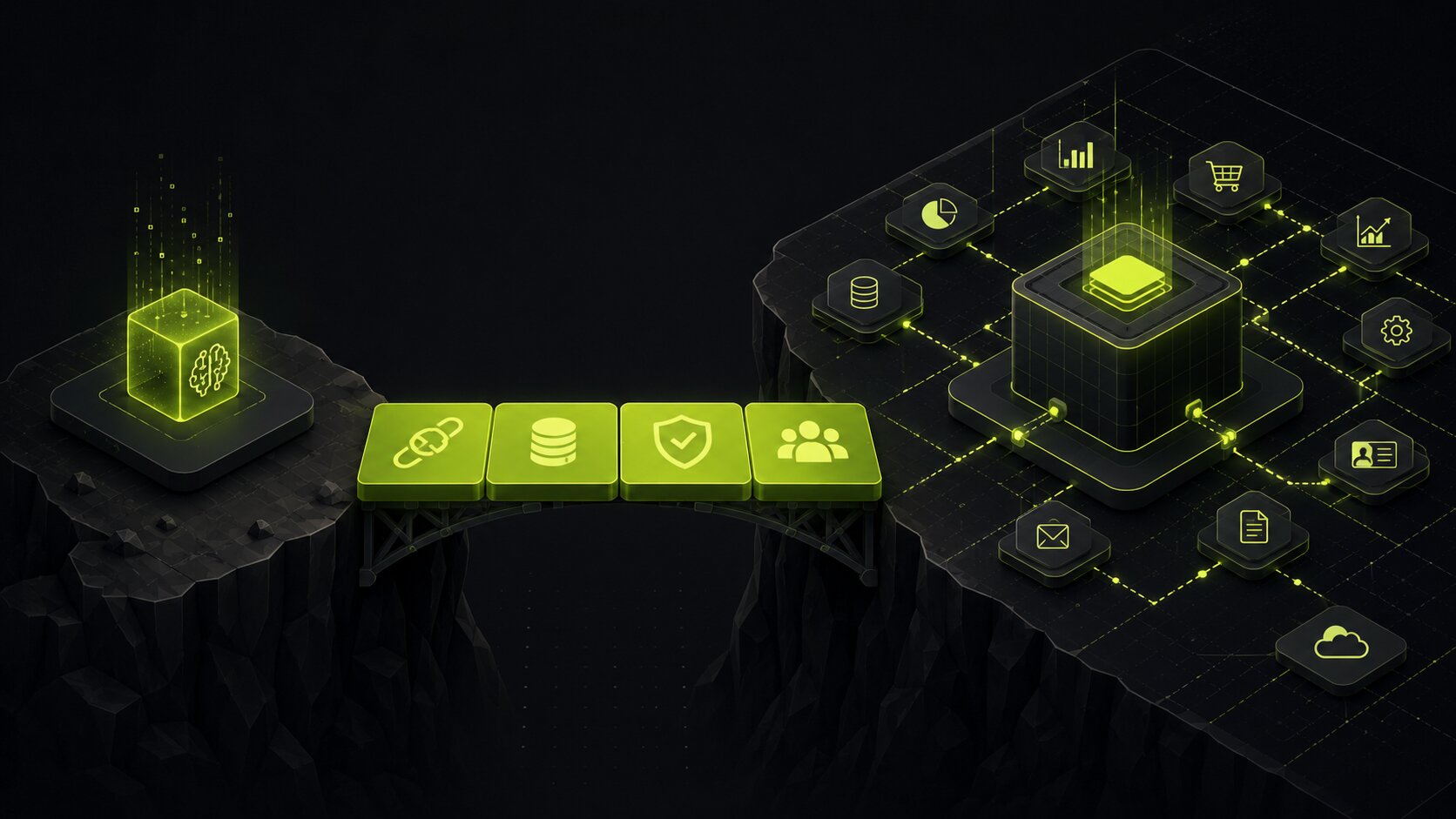
There is a familiar pattern in company AI projects. A team builds a pilot, it works impressively in a demo, everyone gets excited, and then months later it is quietly still a pilot. The technology was never the problem. The prototype did exactly what prototypes do: it proved the idea could work. What it did not do was survive contact with the messy reality of running every day inside a real business.
This is the graveyard most custom AI ends up in, full of promising demos that never became products. The gap between a pilot that impresses and a solution that runs in production is wide, and it is made of exactly the unglamorous work that a demo is designed to skip. Understanding that gap, and planning for it, is the difference between AI that changes how you work and AI that lives forever in a slide deck.
Why the pilot is the easy part
A pilot is built to show promise, and it gets to choose its conditions. It runs on clean, curated data. It handles the straightforward cases and quietly ignores the awkward ones. It lives in a controlled environment, separate from the tangle of systems your business actually runs on. Under those conditions, getting an AI model to look impressive is more achievable than it has ever been.
Production removes every one of those conveniences. The data is live and messy, edge cases show up constantly, and the solution has to work inside your real systems and for real people. So many pilots stall not because the idea was wrong, but because the pilot was mistaken for most of the work when it was the smallest part of it.
Integration into real systems and workflows
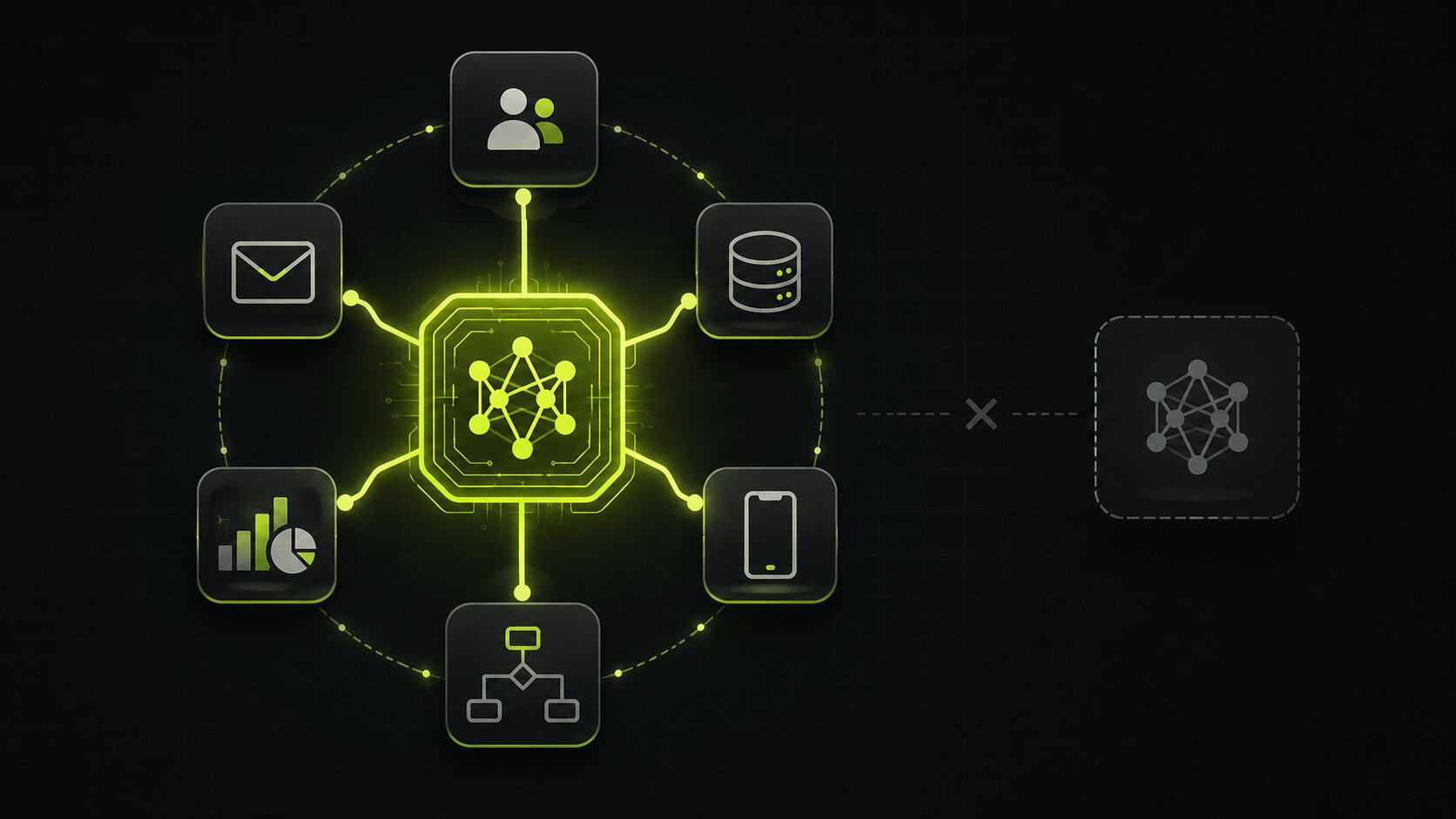
The first wall a pilot hits is integration. A demo can stand alone; a production solution has to plug into the systems your business already uses and fit the workflows your people already follow. If an AI tool requires everyone to change how they work or to jump into a separate app, it does not get used, however clever it is.
This is quietly where most of the engineering effort goes: connecting the model to your data sources, your software, and the way work flows, so the AI shows up where the work happens instead of alongside it. It is the least visible part of the project and often the one that decides whether it lives or dies.
Data that holds up in production
A pilot runs on a tidy sample someone prepared. Production runs on your real data, which is messier, less consistent, and constantly changing. An AI solution that shone on curated examples can stumble badly on the live version of the same data, and that gap surprises teams again and again.
Getting to production means building on the data you will actually have, with the gaps and quirks it really contains, and pipelines that keep clean, current data flowing to the model over time. A solution is only as reliable as the data feeding it, so the data work is not a preliminary step to rush; it is a large part of the job.
Reliability and what happens when it is wrong
A demo only has to work once, in front of an audience. A production system has to work continuously, and it has to fail gracefully when it does not. AI does not always get things right, so a real solution needs to be designed for that: monitored so problems are caught, built to handle its own mistakes sensibly, and set up so a person can step in where the stakes require it.
This is the engineering discipline pilots skip entirely and production cannot. What happens when the model is uncertain, or wrong, or fed something it has never seen? A solution with a good answer to that question can be trusted in the real world. One without it is a demo that has not yet failed in public.
Adoption is the hidden killer
Even a technically flawless solution fails if the people it is built for do not use it. AI changes how work is done, and people are reasonably wary of tools they do not understand or trust, especially ones that touch their own jobs. A solution dropped on a team without bringing them along tends to be quietly ignored, no matter how good it is.
Getting to production is therefore as much about people as technology: involving those whose work will change, earning their trust, making the tool genuinely easier than the old way, and supporting the shift. The best AI project produces nothing if it sits unused, and adoption is the step most often forgotten in the excitement of a working pilot.
Scoping a pilot that can graduate
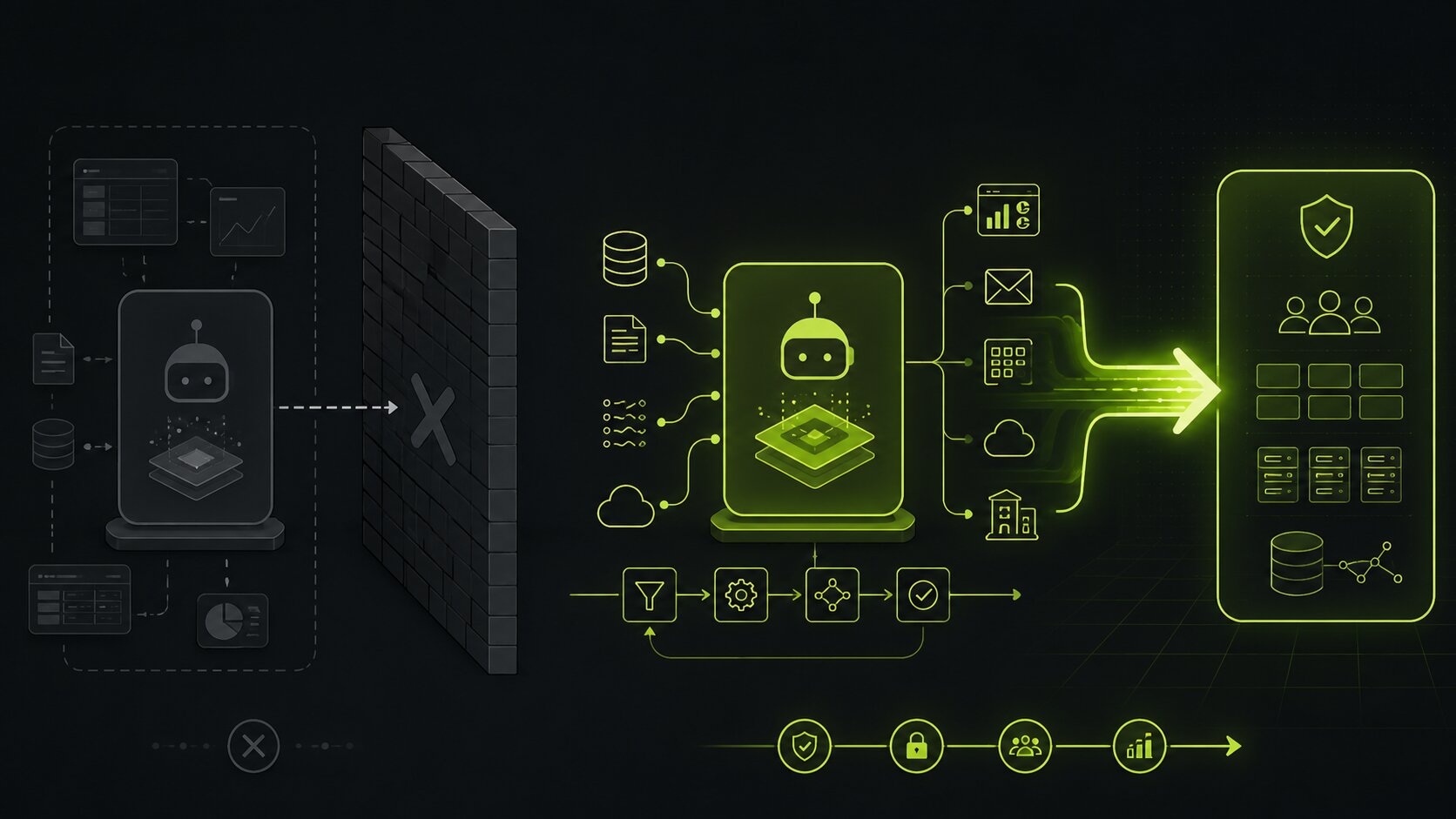
The way out of the pilot graveyard is to design the pilot for production from the very beginning. Instead of a standalone demo on sample data, scope it around a real workflow, on data close to what production will use, with a clear path for how it would integrate and who would adopt it. A pilot built this way proves not just that the idea works, but that it can become part of how the business runs.
This changes the question a pilot is asked to answer, from can we make something impressive to can we make something that ships. That shift in framing is central to how we approach AI solutions, because a pilot designed with production as the goal reaches it far more often than one designed only to win a meeting.
How we approach it
We treat production as the target from day one. We scope pilots around real workflows and realistic data, plan the integration and the data pipelines early, design for reliability and the cases where the model is wrong, and involve the people who will use the solution from the start so adoption is built in rather than bolted on. The pilot exists to prove a path to production, not to be an end in itself.
That discipline is what we bring across more than 500 brands in the US, UK, and Canada. As a global company with our headquarters in Delaware and teams in London and Gurugram, the aim is the same every time: custom AI that actually runs in your business and earns its keep, rather than another impressive demo that never left the lab.
Where this leaves you
The reason most custom AI never reaches production is that the pilot is the easy part and everything after it is the real work. Integration into your systems, data that holds up live, reliability and sensible handling of mistakes, and adoption by the people whose work changes are what turn a promising demo into a working solution, and they are exactly what a pilot is built to skip. Scope for production from the start, treat the unglamorous work as the main event, and your AI has somewhere to graduate to. If you have a pilot that impresses but has not shipped, tell us where it is stuck and we will show you the path to production.
Frequently Asked Questions
What are custom AI solutions?
Custom AI solutions are AI systems built or adapted for a specific business problem rather than bought as a general product. They might combine models, your own data, and integrations into your existing tools to do a particular job, automate a workflow, surface an insight, or power a feature. The point of custom is fit: the solution is shaped around how your business actually works. The hard part is not building a clever prototype but turning it into something reliable that runs in production every day.
Why do most AI pilots fail to reach production?
Because the pilot proves the idea can work, and production requires everything the pilot skipped. A demo runs on clean sample data, handles the happy path, and lives outside your real systems. Production has to deal with messy live data, connect into the tools people actually use, stay reliable when things go wrong, be monitored, and be adopted by the people whose work it changes. Those are harder and less glamorous than the pilot, which is why so many impressive demos never graduate.
What is the difference between an AI pilot and production AI?
A pilot answers can this work; production answers can this be relied on. A pilot is a controlled proof of concept, often on sample data and outside real workflows, meant to show promise. Production AI is embedded in your systems, runs on live data, handles edge cases and failures gracefully, is monitored and maintained over time, and is actually used by your team. The gap between them is where most of the real engineering, and most of the value, lives.
How do you get an AI project into production?
By treating production as the goal from the start, not a later phase. That means scoping the pilot around a real workflow rather than a demo, planning integration into your existing systems, building on data you will actually have in production, designing for reliability and the cases where the model is wrong, and preparing the people whose work will change to adopt it. Get those right and a pilot has somewhere to graduate to instead of stalling as a successful experiment.
How long does it take to move AI from pilot to production?
It depends far more on integration, data, and adoption than on the model itself, so any estimate given before those are understood is a guess. The modelling is often the quickest part; connecting to live systems, making the data production-ready, hardening for reliability, and getting people to use it take the real time. A pilot designed with production in mind reaches it far faster than one designed only to impress.
Want this done for your brand?
Tell us where you are and what you are trying to grow. We will reply with a straight read on your situation and what is worth doing first. No obligation, no lock-in.