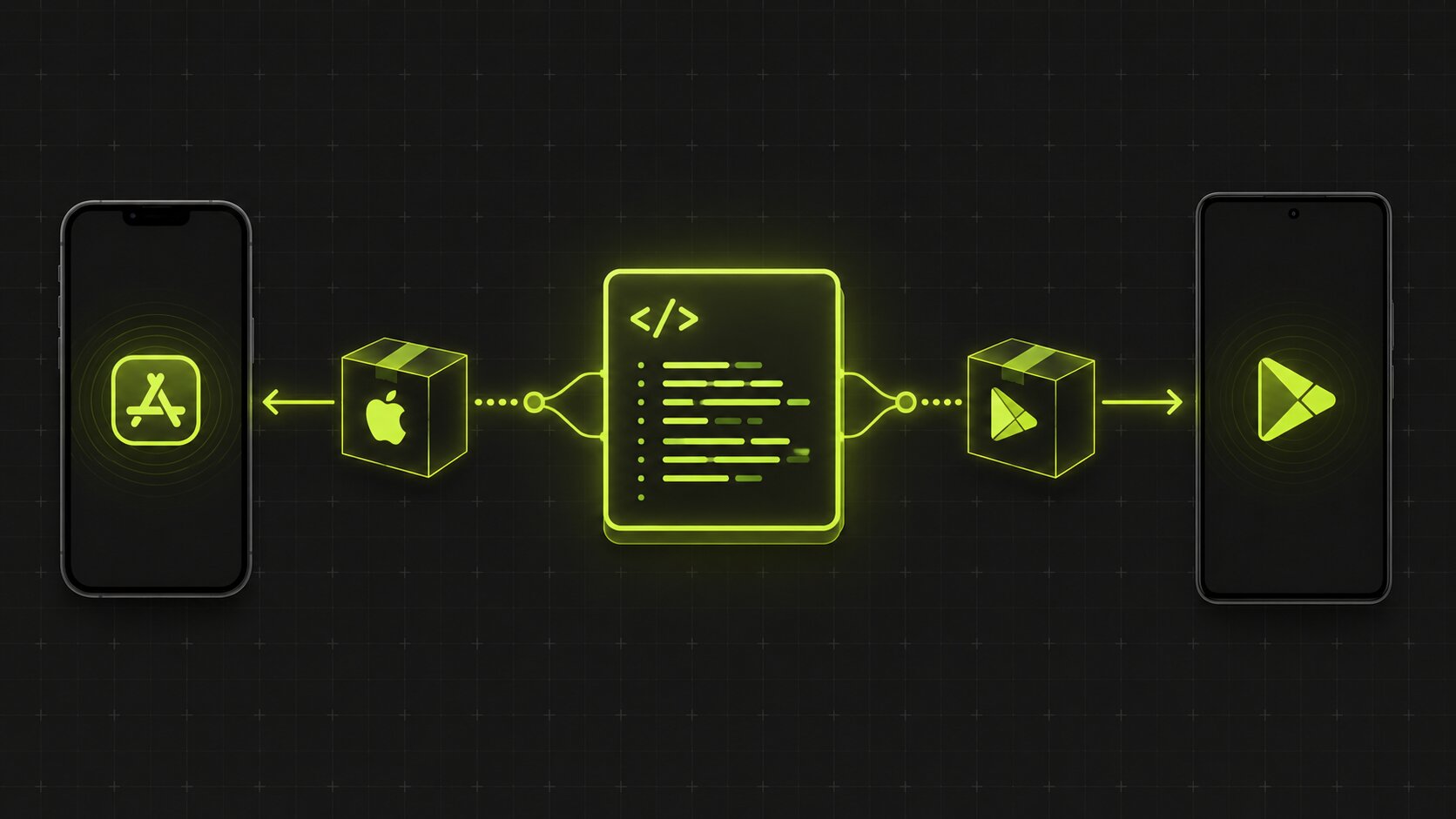
There are two app stores and two operating systems, and for years reaching both meant building the same app twice. One team wrote an iOS version in one language, another wrote an Android version in a different one, and from then on every fix and feature had to be done in two places and kept in step. It worked, but it was expensive, slow, and a constant source of small inconsistencies between the two.
Cross-platform app development is the answer most teams now reach for. You write the app once, in a single shared codebase, and ship it to both the App Store and Google Play. It is not a compromise or a shortcut to a lesser product. Done well, it produces real native apps on both platforms from a fraction of the duplicated effort, which is why it has become the default for the broad majority of apps rather than the exception.
What cross-platform development actually means
Cross-platform means one codebase that targets more than one operating system. Instead of writing separate iOS and Android apps in their native languages, you build the app once using a framework designed to run everywhere, and that framework handles producing a proper app for each platform. The two most established choices are React Native, which uses JavaScript and React, and Flutter, which uses Dart.
The important detail is that these are not websites wrapped in an app shell. A modern cross-platform framework renders genuine native interface components, so the result looks and behaves like a real app on each platform, not a web page in disguise. Users download a normal app from their store and never know, or care, that a single codebase sits behind both versions.
One codebase, two app stores
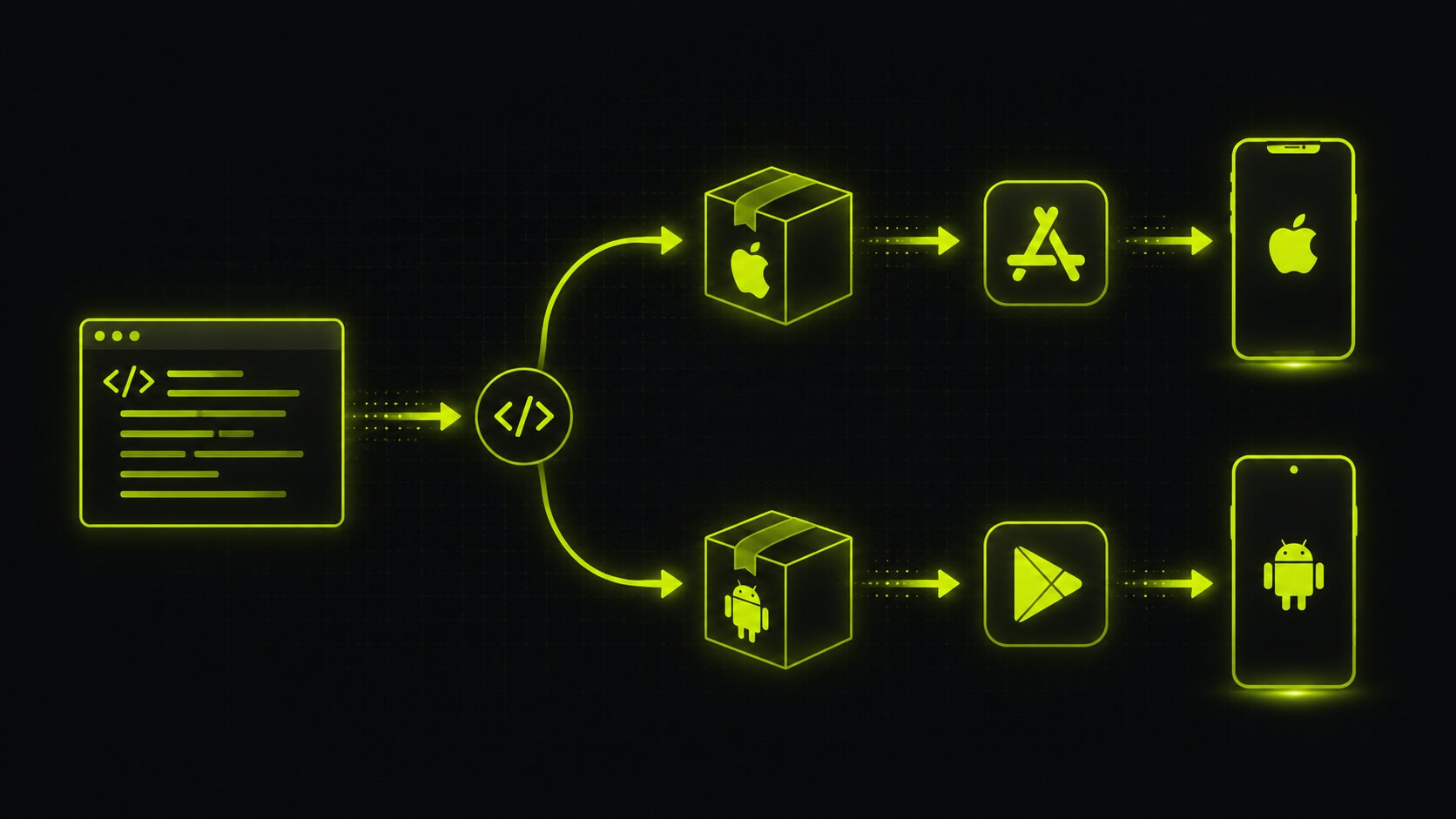
The mechanics are straightforward in principle. You maintain one codebase, and when it is time to release, the framework compiles it into two separate builds: a genuine iOS app package and a genuine Android one. Each goes to its own store, through that store's normal submission and review process, exactly as a native app would. From the user's side there are simply two apps available to download; from your side there is one project to build and maintain.
That single source of truth is the whole point. A new feature is written once and appears on both platforms. A bug is fixed once and the fix reaches everyone. The duplicated labour of keeping two separate apps aligned, which quietly consumes so much of a two-native-app budget, mostly disappears.
What the single codebase saves
The clearest saving is cost, and it shows up twice. The initial build is cheaper because one team produces both apps instead of two teams producing one each. The larger and less obvious saving is everything after launch, because the real lifetime expense of an app is the years of updates, fixes, and features that follow, and a shared codebase compresses all of that into a single stream of work.
There is a speed benefit too. Getting a product into real users' hands on both platforms at once, rather than staggering two separate builds, means you learn faster and iterate sooner. And because both apps come from the same source, they stay consistent by default, sparing you the subtle drift in behaviour and design that creeps in when two teams build the same thing separately. This combination is why most of the mobile application development work we take on starts from a cross-platform foundation.
Where the single codebase has limits
Cross-platform is the right default, not a universal one, and being honest about the edges is part of using it well. Most apps live comfortably inside what these frameworks do, but a few do not. Graphics-intensive games, augmented reality, heavy on-device processing, and experiences that depend on the very latest platform-specific hardware features are where native's direct access still wins, and where building twice can be worth it.
Even within a mostly cross-platform app, you occasionally need a small amount of native code to reach a specific capability or to tune a particular screen, and good frameworks make that possible. The skill is knowing when a feature genuinely requires it versus when the cross-platform path handles it fine, because over-reaching for native where it is not needed quietly gives back the savings you came for.
How to build cross-platform well

Choosing cross-platform is the start, not the finish. The framework choice should follow your team and your product: React Native if your people are fluent in JavaScript and React, Flutter if you want very precise control over a custom, animation-rich interface. Either can produce an excellent app, so the decision is about fit rather than fashion.
Beyond that, the fundamentals are the same as any serious software: a clean, well-structured codebase, attention to each platform's design conventions so the app feels at home on both, real testing on real devices, and a deliberate plan for the few places that need native code. A cross-platform app built carelessly is still a bad app. The framework saves you duplicated effort; it does not save you from doing the work properly.
What a good app team does differently
The difference is judgement, not just tooling. A capable team starts from what your app needs to do and who it is for, picks the framework that fits your people and your product, and is honest about the rare cases where native is the better answer. It builds the shared codebase cleanly, respects both platforms' conventions, and uses native code only where it earns its place.
That balance is what we bring across more than 500 brands in the US, UK, and Canada. As a global company with our headquarters in Delaware and teams in London and Gurugram, the aim is always the same: a high-quality app on both stores, built and maintained efficiently from one codebase, that you can keep improving for years without paying to do everything twice.
Where this leaves you
Cross-platform app development is how most teams now reach both stores without building everything twice. One shared codebase compiles into real iOS and Android apps, a single team ships and maintains both, and the savings show up most in the years of updates after launch rather than just the first build. It fits the large majority of apps, with native held in reserve for the graphics-heavy or hardware-bound few. Choose the framework that suits your team, build the codebase properly, and be deliberate about the handful of places that need native, and you get the reach of two apps for much closer to the cost of one. If you are weighing how to build, tell us what your app needs to do and we will tell you, plainly, the approach we would take.
Frequently Asked Questions
What is cross-platform app development?
It is building a mobile app from one shared codebase that runs on both iOS and Android, instead of writing two separate apps in each platform's own language. A framework like React Native or Flutter takes that single codebase and produces a real app for each store, rendering native interface components rather than running inside a browser. The result is one team and one source of truth serving both platforms, which is where most of the time and cost savings come from.
Which framework is best for cross-platform, Flutter or React Native?
Both are strong, mature choices, and the better one depends on your team and product more than on any league table. React Native uses JavaScript and React, so teams already fluent in web technology tend to move fast in it and reuse skills they have. Flutter uses Dart and gives very precise control over the interface, which suits highly custom, animation-rich designs. Neither is a wrong answer for most apps; the right one is usually whichever fits the skills you have and the experience you want to build.
Is a cross-platform app cheaper than building two native apps?
Usually, because you build and maintain one codebase instead of two. A single team ships to both stores, which lowers the initial build cost and, more significantly, the ongoing cost of every future update, since one change reaches both platforms at once. The saving is real but not total. Polished apps still need some platform-specific attention, and a little native code is occasionally required, so treat cross-platform as a way to spend your budget more efficiently rather than a way to get a serious app for free.
Can a cross-platform app go on both the App Store and Google Play?
Yes. A cross-platform framework compiles your shared codebase into a genuine iOS app and a genuine Android app, each of which is submitted to its respective store like any other. Users download a normal native app and cannot tell how it was built. You still have to meet each store's separate review guidelines and requirements, so the submission process is the same as it would be for native, just from one codebase instead of two.
Are cross-platform apps as good as native apps?
For the large majority of apps, users cannot tell the difference. Scrolling, navigation, forms, media, and network-driven screens all perform well, because the framework renders real native components. The gap only appears at the extremes, in very graphics-intensive or animation-heavy experiences or heavy on-device processing, where native's direct hardware access has an edge. If your app's core value lives in that territory, native is worth the extra cost; if it does not, which is true of most products, cross-platform serves it well.
Want this done for your brand?
Tell us where you are and what you are trying to grow. We will reply with a straight read on your situation and what is worth doing first. No obligation, no lock-in.