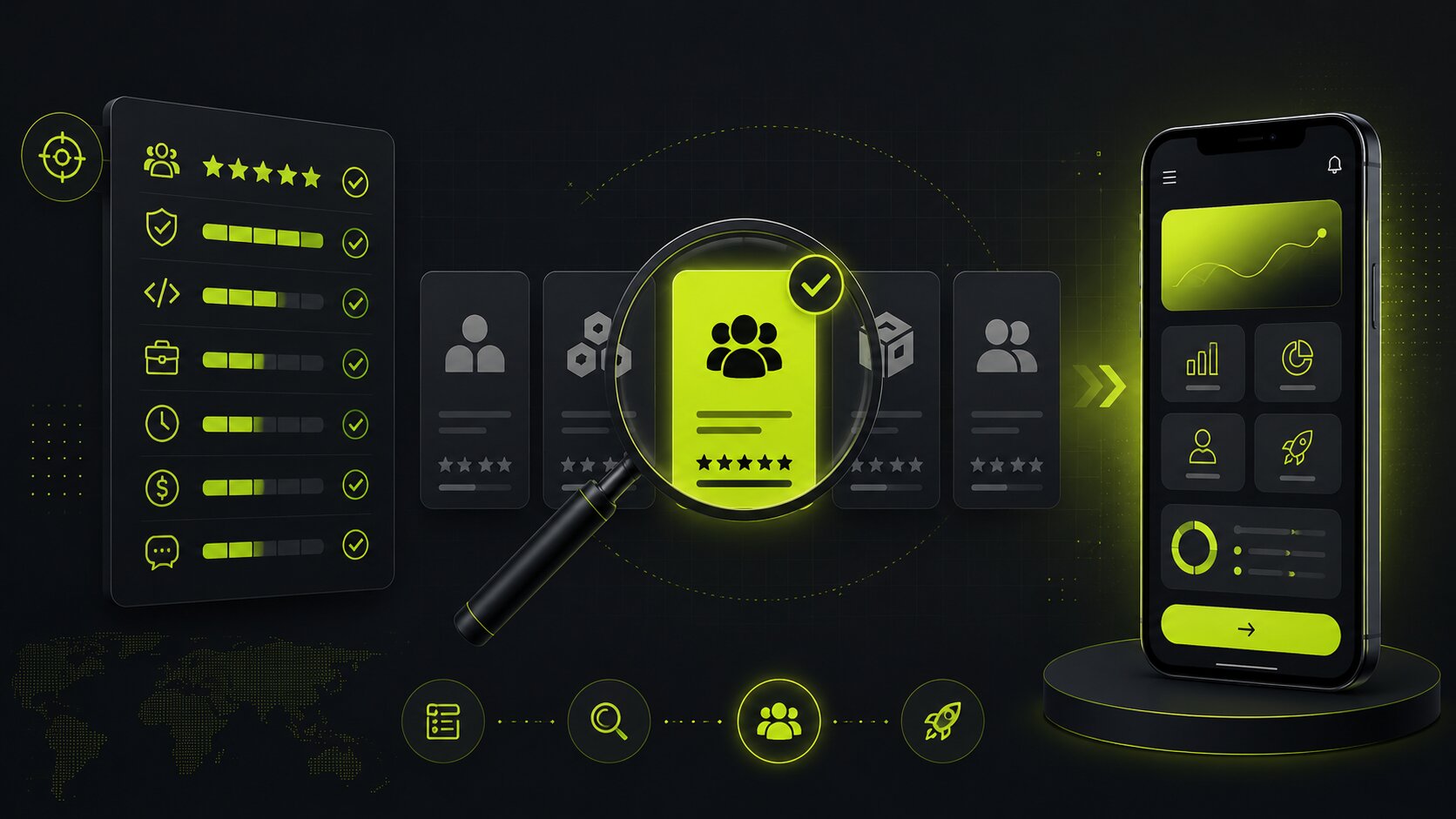
Choosing who builds your app is one of those decisions that looks like a procurement exercise and turns out to be a fork in the road. Pick well and you get a product that works, a team that tells you the truth, and a codebase you can keep improving for years. Pick badly and you get missed deadlines, a half-finished app, surprise bills, and sometimes a rebuild from scratch with someone else. The app itself is only ever as good as the company you trusted to make it.
The hard part is that the worst choices rarely look bad up front. The cheapest quote, the fastest promised timeline, and the slickest sales deck are exactly the things that lure people into projects they regret. Choosing a development company well is less about finding the lowest price and more about reading the signals that tell you what working with a team will actually be like.
Start with the partner, not the price
The instinct is to collect quotes and compare numbers, but price is the worst place to begin. An app is a long collaboration, not a one-off purchase, and the cost of choosing the wrong partner dwarfs any saving on the quote. A team that is cheap but unreliable, or fast but careless, ends up being the most expensive option once you count the fixes, the delays, and the rebuild.
Begin instead by judging fit. Does the company understand your business and your users? Does it ask sharp questions before offering answers? Can it explain why it recommends one approach over another in plain language? A partner that leads with curiosity about your problem is worth more than one that leads with a discount.
Look at how they think, not just their portfolio
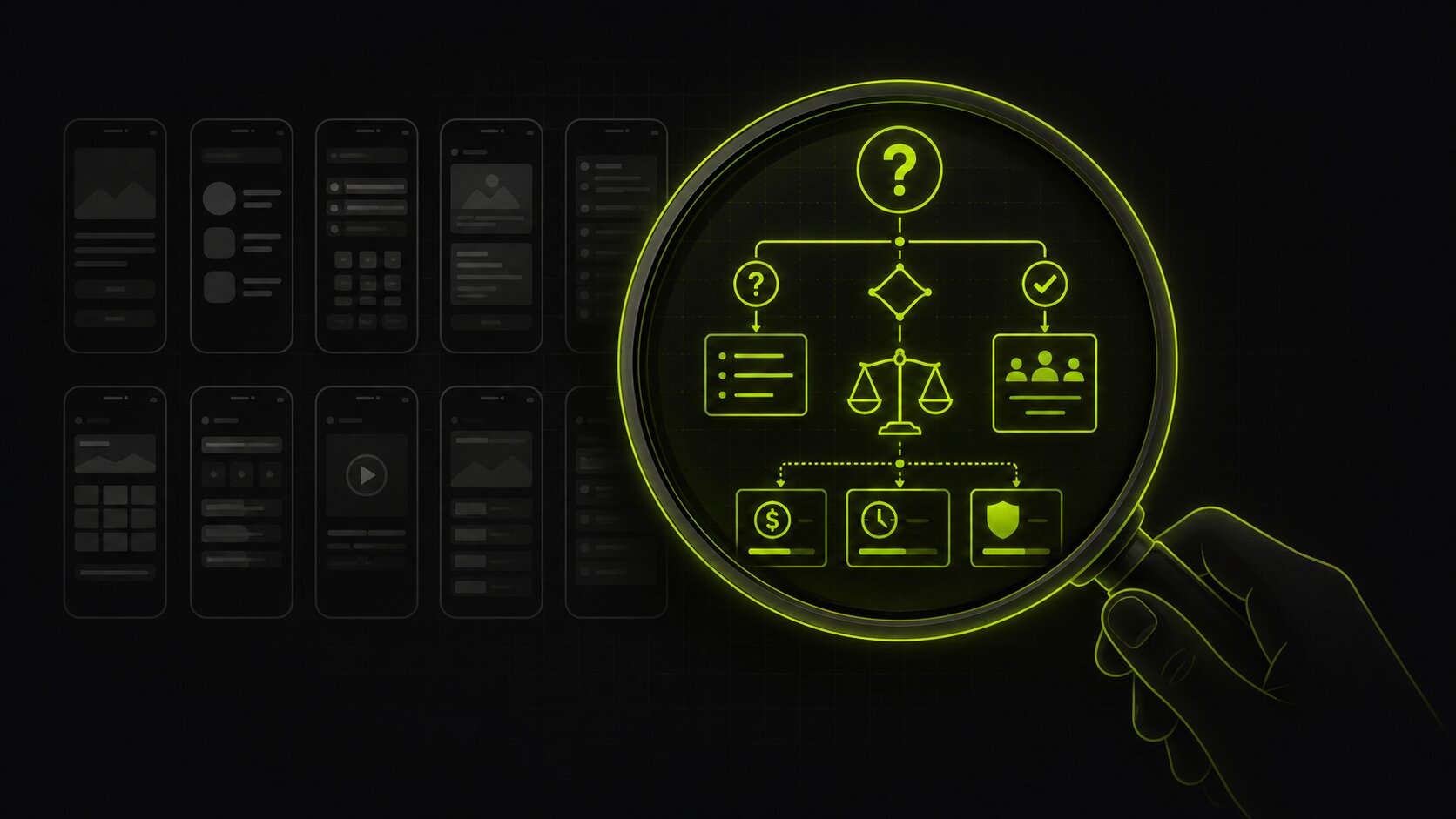
A portfolio shows you what a company has built, which matters, but it does not show you how they will handle your project when something goes wrong. Polished case studies are easy to assemble. What tells you more is how a team reasons: how they scope a problem, where they push back on your assumptions, and whether they are honest about trade-offs instead of promising everything.
Pay attention to the questions they ask you. A company that wants to understand your users, your constraints, and what success actually looks like is thinking like a partner. One that jumps straight to a price and a timeline without understanding the problem is treating your app as a transaction, and that mindset shows up later in every corner they cut.
The questions that reveal a good partner
A few direct questions surface more than any sales pitch. Ask who will actually work on your project, because the people in the room during the pitch are not always the ones who write the code. Ask to speak to past clients and to see work similar to what you need. Ask how they handle changes mid-project, how they test, and what happens when something breaks.
The most revealing question is often the simplest: what would you tell me not to build? A partner who is willing to talk you out of an unnecessary feature, or a costly idea that will not serve your users, is one that has your interests in mind rather than just your budget. A company that says yes to everything is selling, not advising.
Red flags worth walking away from
Some warning signs are reliable enough to act on. A firm that quotes a fixed price before understanding what you actually need is guessing, and that guess will be corrected later at your expense. An unrealistic timeline is a promise made to win the deal, not to be kept. No relevant work, no references, or vague answers about process should all give you pause.
The quietest red flag is the most important: poor communication during the sales process. If a company is slow, unclear, or evasive while it is trying to win your business, it will not suddenly become responsive once the contract is signed. How they treat you now is the most honest preview of the whole project you will get.
Ownership, and what happens after launch
An app is not finished when it launches; that is when it starts needing attention. Stores change their rules, devices update, bugs surface, and users ask for more. Before you sign anything, understand what support looks like after launch and what it costs, because a team that disappears at handover leaves you stranded with a product you cannot maintain.
Just as important is ownership. You should own your source code, your app store accounts, and the intellectual property you paid to create, confirmed in writing before work begins. Some companies keep clients dependent by holding the code or the accounts hostage. A trustworthy partner has no problem with you owning what is yours and being free to take it elsewhere.
Communication and process
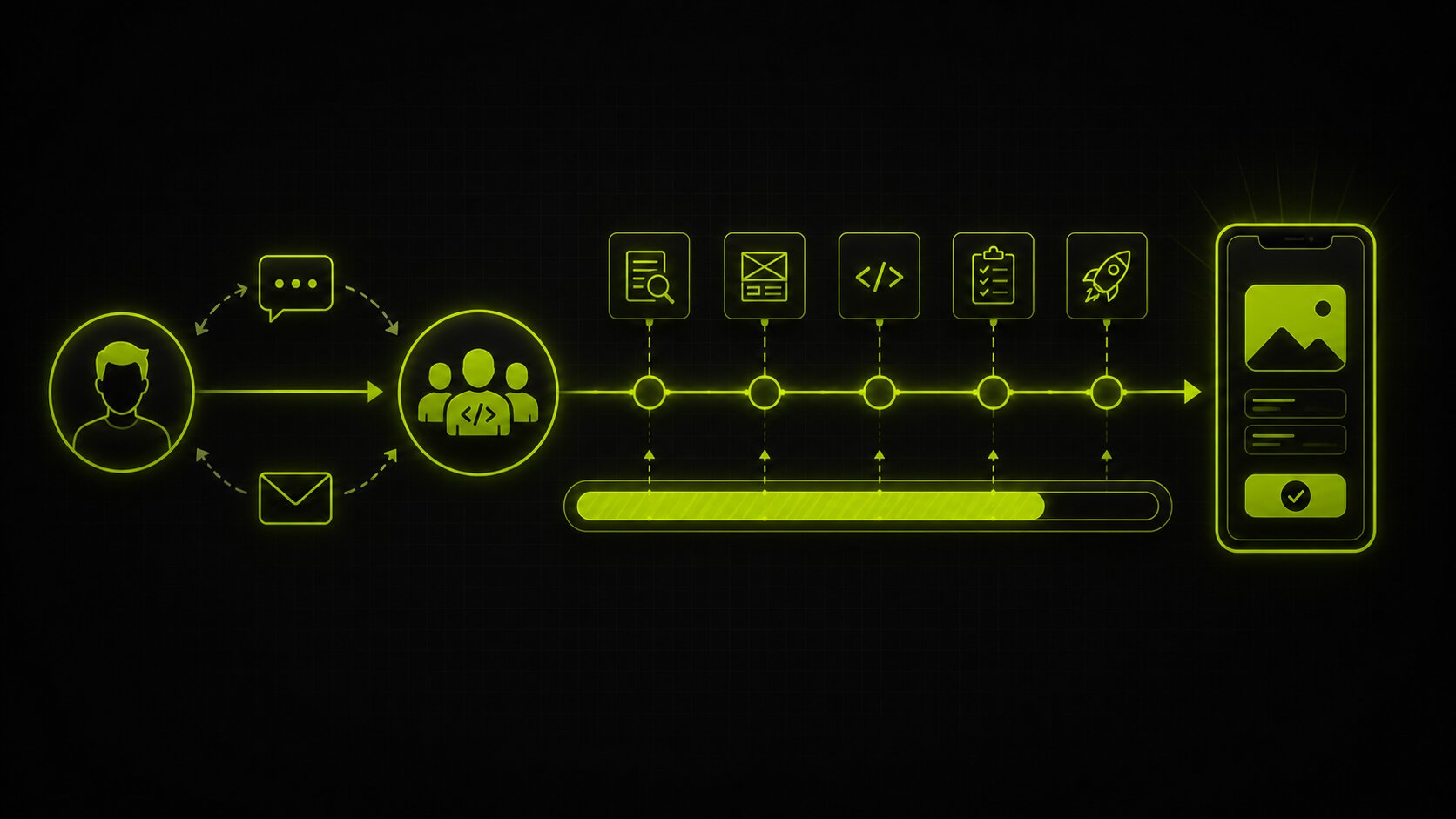
Most app projects that go wrong do not fail on technology, they fail on communication. A capable team with a clear, regular process that keeps you informed and involved will outperform a more talented one that goes quiet for weeks and resurfaces with surprises. Ask how often you will hear from them, how you will see progress, and who your point of contact is.
A steady rhythm of updates, visible progress, and honest conversations when things slip is what separates a project that feels in control from one that feels like a gamble. This is the standard we hold ourselves to in our mobile application development work, because a great app built in silence still erodes the trust that makes the next phase possible.
How we work
We try to be the partner this article describes: we ask about your users and your business before we talk price, we are honest about trade-offs and what you should not build, and we keep communication clear and regular so you always know where your project stands. You own your code and accounts, and we are there after launch, not gone at handover.
That approach is what we bring across more than 500 brands in the US, UK, and Canada. As a global company with our headquarters in Delaware and teams in London and Gurugram, the aim is the same every time: an app you are glad you built, made by a team you are glad you chose, with no regret waiting in the months after launch.
Where this leaves you
Choosing a mobile app development company is a decision about trust as much as technology. Lead with fit rather than price, judge how a team thinks rather than only what it has built, ask the questions that reveal how it behaves under pressure, and treat poor communication as the warning it is. Confirm ownership and after-launch support before you start, and you avoid the expensive surprises that turn an app project into a cautionary tale. If you are weighing your options, tell us what you are trying to build and we will give you a straight answer about how we would approach it.
Frequently Asked Questions
How do I choose a mobile app development company?
Start with how they think, not what they charge. A strong partner asks about your users, your business, and the problem you are solving before quoting a price, and explains the reasoning behind its recommendations rather than just listing technologies. Look at relevant past work, talk to references, and watch how they communicate during the sales process, because how they treat you now is how they will treat you once the contract is signed. The cheapest quote is rarely the cheapest project once you count what it costs to fix or rebuild.
How much does it cost to build an app?
It depends almost entirely on what the app has to do, so any number quoted before that is understood is a guess. A simple app with a focused feature set costs far less than a complex one with custom backends, integrations, and high design polish. What matters more than the headline figure is what the price includes: design, testing, project management, and post-launch support are part of a real build, and a quote that omits them only looks cheaper. Ask for a breakdown, not just a total.
What questions should I ask an app development company?
Ask who will actually work on your project and how they communicate, since the people and the process matter as much as the pitch. Ask to see relevant work and to speak to past clients. Ask how they handle changes, testing, and problems when something goes wrong, because something always does. Ask who owns the code and what happens after launch. The answers tell you less about their slides and more about what working with them will really be like.
Who owns the code when an agency builds my app?
You should, and it is worth confirming in writing before you start. In a healthy arrangement, you own the source code, the accounts, and the intellectual property for the app you paid to build, and you can take it elsewhere if you ever need to. Some companies keep clients dependent by holding the code or the accounts, which quietly traps you. Clarify ownership of the codebase, the app store accounts, and any assets up front, so you are never held hostage by the people who built your product.
What are red flags when hiring an app development company?
Be cautious of a firm that quotes a firm price before understanding what you need, promises an unrealistic timeline, or cannot show relevant work or references. Vague answers about who owns the code, what happens after launch, or how testing is handled are warnings too. Poor communication during the sales process is one of the clearest signals, because it rarely improves later. Several of these together usually mean the project will cost more than the quote suggests.
Want this done for your brand?
Tell us where you are and what you are trying to grow. We will reply with a straight read on your situation and what is worth doing first. No obligation, no lock-in.