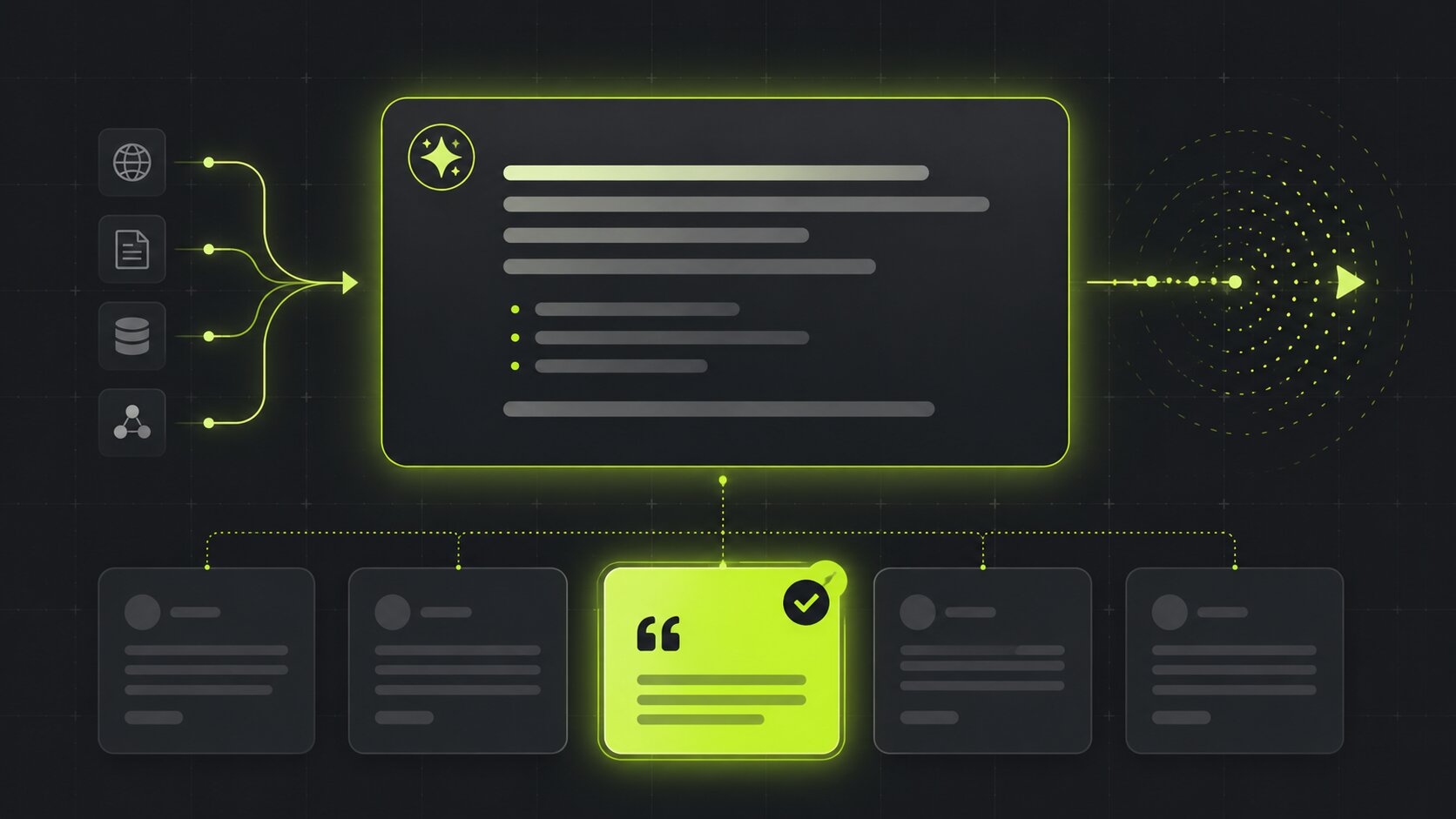
For twenty years, winning at search meant ranking a page so someone would click it. That is still true, but it is no longer the whole game. More and more, people ask a question and get an answer written for them on the spot, by ChatGPT, by Perplexity, by the AI summaries now sitting at the top of search results. The answer names a few sources, and the rest of the internet may as well not exist for that query.
This changes the goal. It is no longer enough to be a link on a page of results a person scrolls through. You want to be one of the handful of sources the AI actually draws on and quotes. That is what answer engine optimization is about: not just ranking, but being the answer, or at least the source the answer trusts.
What answer engine optimization actually is
Answer engine optimization, often shortened to AEO, is the work of making your content likely to be used and cited when an AI system answers a question. The audience shifts. You are no longer only persuading a person to click; you are making it easy for a machine to pull a clear, accurate point from your content and attribute it to you in the answer it generates.
It is not a replacement for SEO so much as an evolution of it. The same foundations, clear content, genuine authority, and a technically sound site, still matter, because an answer engine draws on much the same signals a search engine does. What changes is the emphasis, toward content that answers specific questions so plainly that a system can lift the answer and trust the source.
How answer engines choose what to quote

An answer engine reading the web is trying to do one thing: assemble a trustworthy answer from sources it can rely on. It favours content that states a clear position, backs it up, and is easy to understand without wading through fluff. A page that answers the exact question directly is far more quotable than one that circles the topic for a thousand words before saying anything useful.
Trust is the other half. These systems lean toward sources that carry authority, that other credible places reference, and that have a track record of being accurate. Being clear gets you considered; being credible gets you quoted. A page can be beautifully written and still be ignored if nothing about it signals that the source can be trusted.
Write answers, not just pages
The most practical shift AEO asks for is to write the answer, not just the article. If people are asking a specific question, say the answer plainly, near the top, in a way that stands on its own if lifted out of the page. Then expand, explain, and add the nuance a human reader wants. You lose nothing with human readers by being clear first, and you gain everything with a machine that needs to extract a clean point.
This is the opposite of the padded, keyword-stuffed writing that older SEO sometimes rewarded. Answer engines have no patience for filler. Content that respects the reader's question and answers it directly is exactly the content they find easiest to quote.
Be the clear, citable source
Beyond plain answers, the structure of your content decides how usable it is. Clear headings, self-contained sections, honest and specific facts, and a logical flow all make it easier for a system to isolate the point that answers a given question and attribute it to you. Vague, meandering, or hedge-everything writing is hard to quote, because there is no clean statement to pull.
Specificity is a quiet advantage here. Real detail, concrete explanations, and precise language make content more useful to an answer engine than broad generalities that could have come from anywhere. The clearer and more particular your content, the more obviously it is the source worth citing.
Authority still decides who gets trusted
None of the clarity in the world substitutes for credibility. Answer engines, like search engines before them, are trying to avoid surfacing something wrong, so they lean on sources that demonstrate real expertise and are trusted elsewhere. The reputation you build, the places that reference you, and the consistency of getting things right are what move you from a possible source to a preferred one.
This is reassuring, because it means the durable way to win at AEO is the same as the durable way to win at everything in search: genuinely know your subject and be useful about it. The brands AI quotes are usually the brands that earned authority the honest way, and that work compounds across search and answer engines alike.
How to measure being quoted
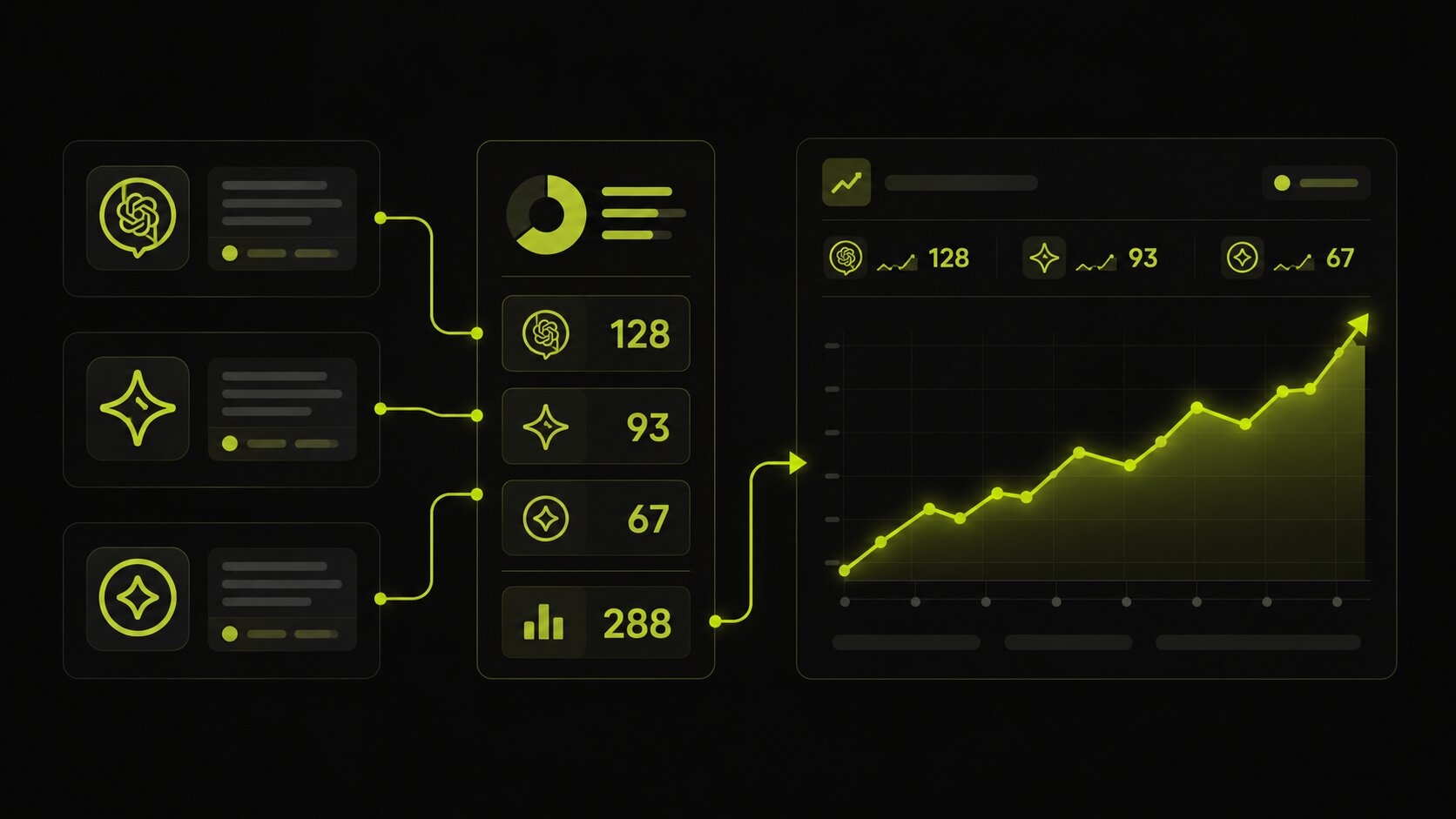
You cannot improve what you do not watch, and AI visibility is measurable even if it is less exact than a rankings report. You can track how often your brand is cited across the major answer engines for the questions that matter, monitor how those systems describe you, and watch referral signals from AI sources. The picture is fuzzier than a keyword position, but it is clear enough to show whether you are gaining ground.
Treating this as a real, tracked channel is what separates brands that adapt from those that assume search still works the way it did. It sits at the centre of how we approach AI visibility, because being quoted by the systems people increasingly ask first is quickly becoming as valuable as ranking ever was.
Where this leaves you
Search is splitting into two jobs: ranking a page a person clicks, and being the source an AI quotes when it answers for them. Answer engine optimization is how you win the second. Answer specific questions plainly and early, structure content so a clean point can be lifted and attributed, be accurate and specific, and earn the authority that makes a system trust you. None of it is a trick, and all of it compounds with the SEO you already do. Do it well and, when someone asks the question your business should own, the AI answers with your name on the source. If you want to know how visible your brand already is inside AI answers, tell us your space and we will show you where you stand and what would move it.
Frequently Asked Questions
What is answer engine optimization (AEO)?
Answer engine optimization is the practice of making your content likely to be quoted when an AI answer engine responds to a question. Instead of only trying to rank a page in a list of blue links, you optimise so systems like ChatGPT, Perplexity, and AI overviews draw on your content and cite you as a source in the answer they generate. It is search optimisation adapted for a world where many people get an answer directly, without ever clicking through to a page.
How is AEO different from SEO?
Traditional SEO aims to rank a page so a person clicks it. AEO aims to have your content used and credited inside an answer the AI writes for the user, who may never visit your site. The overlap is large, because the same qualities that earn rankings, clear content, real authority, and technical health, also make you a good source to quote. The difference is emphasis: AEO rewards content that directly and clearly answers specific questions, because that is what an answer engine can lift and attribute.
How do you get quoted or cited by AI like ChatGPT?
Answer the question clearly and early, make the facts easy to extract, and earn the authority that makes an AI comfortable trusting you. In practice that means writing content that states answers plainly rather than burying them, structuring pages so a specific point is easy to isolate, being accurate and specific, and building the kind of reputation and citations across the web that signal you are a credible source. There is no trick that forces a citation; you become quotable by being genuinely the clearest, most trustworthy answer available.
Is answer engine optimization the same as generative engine optimization (GEO)?
They describe closely related ideas and are often used interchangeably. Both are about earning visibility inside AI-generated answers rather than only in traditional search results. If there is a shade of difference, answer engine optimization tends to emphasise being the quoted answer to a specific question, while generative engine optimization is sometimes used for the broader goal of influencing what generative systems say about you. In practice the work overlaps heavily, and a brand doing one well is usually doing the other.
Can you measure whether AI is citing your brand?
Yes, though not as precisely as classic rankings, and the methods are still maturing. You can track how often your brand appears or is cited across the major answer engines for the questions that matter to you, watch mentions and referral traffic from AI sources, and monitor how these systems describe you when asked. It is less exact than a keyword ranking report, but it is measurable enough to tell whether your visibility in AI answers is improving over time and where the gaps are.
Want this done for your brand?
Tell us where you are and what you are trying to grow. We will reply with a straight read on your situation and what is worth doing first. No obligation, no lock-in.