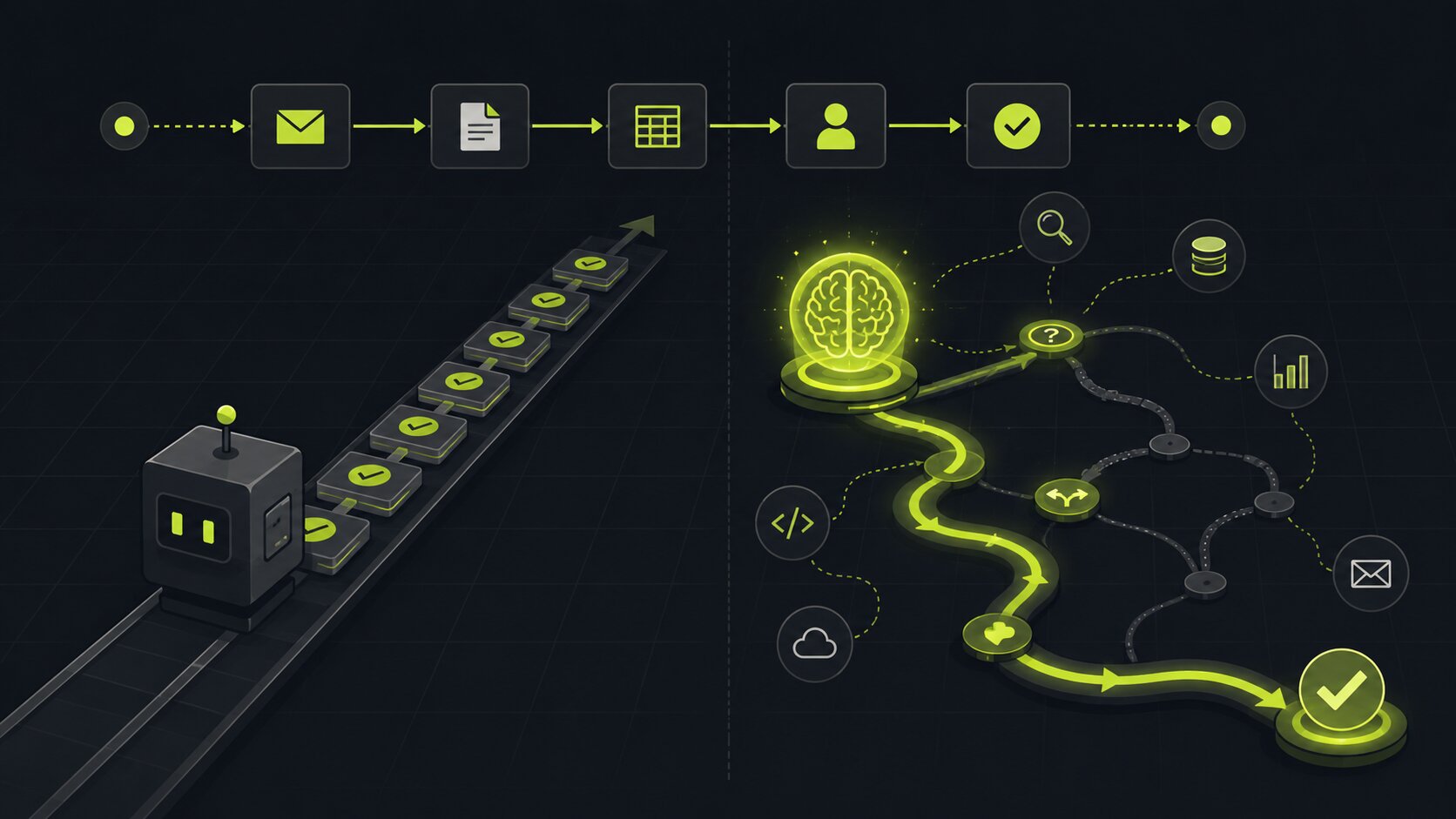
Business automation is not new. For years, companies have used software robots to take over the repetitive, rule-bound work that fills so many back offices: moving data between systems, filling forms, copying figures from one place to another. That approach, robotic process automation, quietly saved an enormous amount of human time. It also had a hard ceiling, and everyone who used it knew where that ceiling was.
Agentic process automation is what sits above that ceiling. Instead of a robot following a fixed script, it uses AI agents that can reason toward a goal, handle situations nobody scripted in advance, and make the kind of judgement calls that used to require a person. The two are often lumped together as automation, but the difference between them is not a small upgrade. It changes what can be automated at all.
What traditional RPA actually does
Traditional RPA is a rule-follower, and a very good one. You define the steps precisely, and the software carries them out exactly, tirelessly, and without error, for as long as the inputs look the way you said they would. For stable, high-volume, predictable tasks, it is hard to beat on reliability or cost, and it remains genuinely useful.
Its limitation is built into its strength. Because it only does what it was told, it breaks the moment reality steps outside the rules. An unexpected format, a missing field, a decision the script did not anticipate, and the bot stops or does the wrong thing. RPA cannot interpret, it cannot judge, and it cannot handle the messy exceptions that make up so much real work. It automates the predictable and hands everything else back to a human.
What makes automation agentic
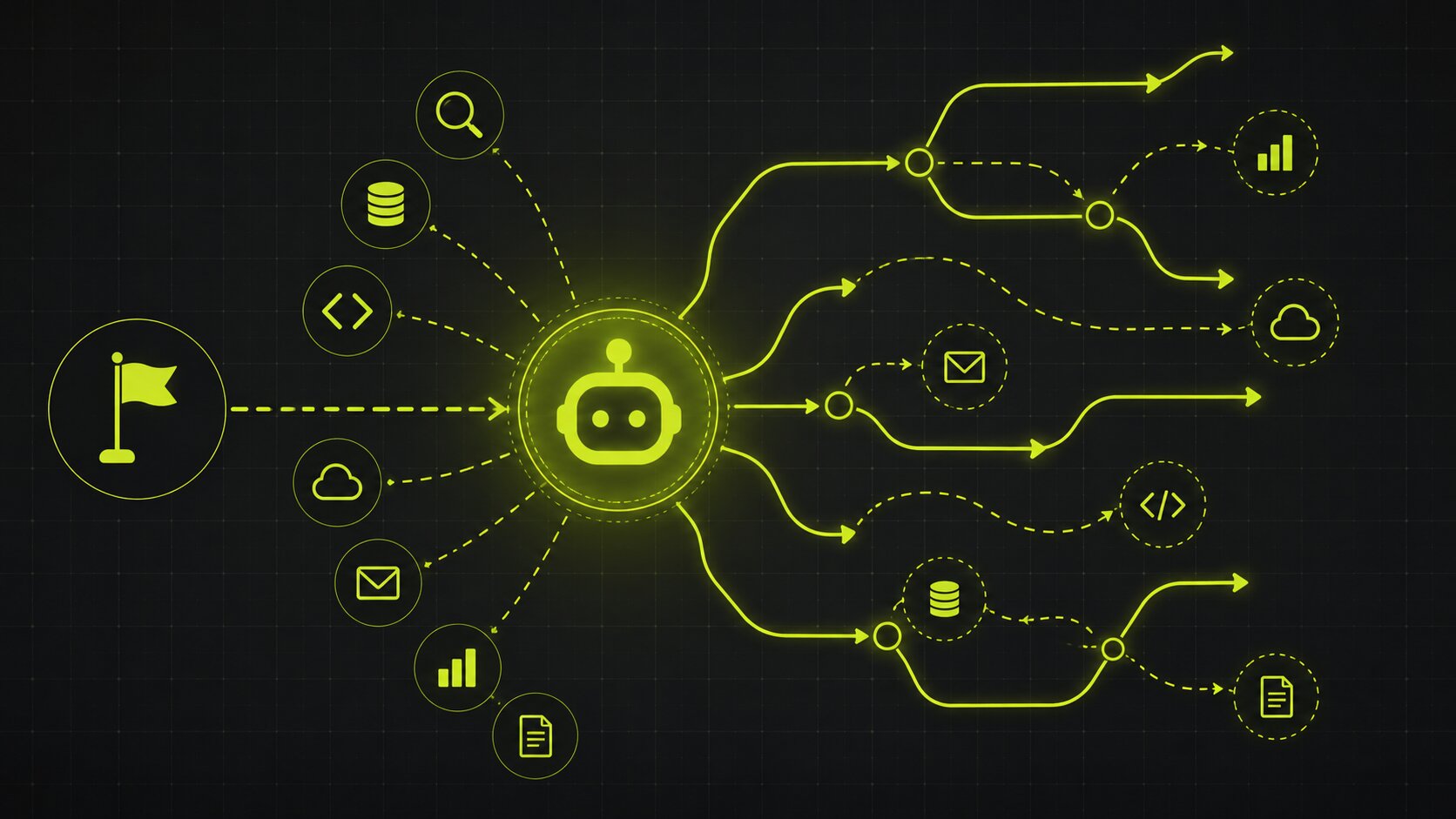
Agentic automation flips the model. Rather than being handed a fixed sequence of steps, an AI agent is given a goal and a set of tools, and it works out how to reach the goal itself. It can read unstructured information, weigh options, decide what to do next, and adapt when it meets something unexpected, much closer to how a capable person approaches a task than to how a script runs.
That shift from following instructions to pursuing an objective is the whole point. An agent does not need every eventuality spelled out, because it can reason about the situation in front of it. This is why it can take on work that was always out of reach for rule-based automation: the parts that involve interpretation, ambiguity, and judgement rather than a clean, repeatable pattern.
The real difference: rules versus reasoning
Strip away the terminology and the distinction is simple. RPA follows rules; an agent pursues a goal. A rule-based bot is only ever as smart as the instructions it was given, and it fails safely, or unsafely, the instant it meets a case those instructions did not cover. An agent is given the outcome you want and the means to get there, and it figures out the path, including through situations no one anticipated.
This is why the comparison is not really RPA versus agents as competing products, but rigid execution versus adaptive reasoning as two capabilities. One is perfect when the world behaves predictably; the other earns its keep when it does not, which in most real processes is more often than anyone likes to admit.
Where RPA still wins
None of this makes RPA obsolete, and treating it as yesterday's technology would be a costly mistake. For processes that are stable, repetitive, and cleanly rule-based, RPA is often the better tool: it is proven, predictable, inexpensive to run, and does not need the reasoning overhead of an agent to do a job that never varies. If a task can be fully described as a set of rules and rarely throws surprises, a rule-based bot is exactly right.
Reaching for an AI agent to do work a simple script handles perfectly is over-engineering, adding cost and unpredictability where neither is needed. The skill is knowing which kind of work you are looking at, because the wrong tool in either direction wastes money and trust.
Where agentic automation changes the game
The processes that defeated traditional automation are the ones agentic automation opens up. Work that depends on reading messy documents, interpreting a customer's actual intent, making a judgement between imperfect options, or handling a steady stream of exceptions was always where RPA quietly gave up and passed the task back to people. Those are exactly the tasks an agent can now take on.
This is a genuine expansion of what automation can reach, not a marginal efficiency gain. It moves automation from the narrow band of perfectly predictable tasks into the far larger territory of work that needs a bit of thinking, which is where most of the human effort in a business actually goes.
They work better together
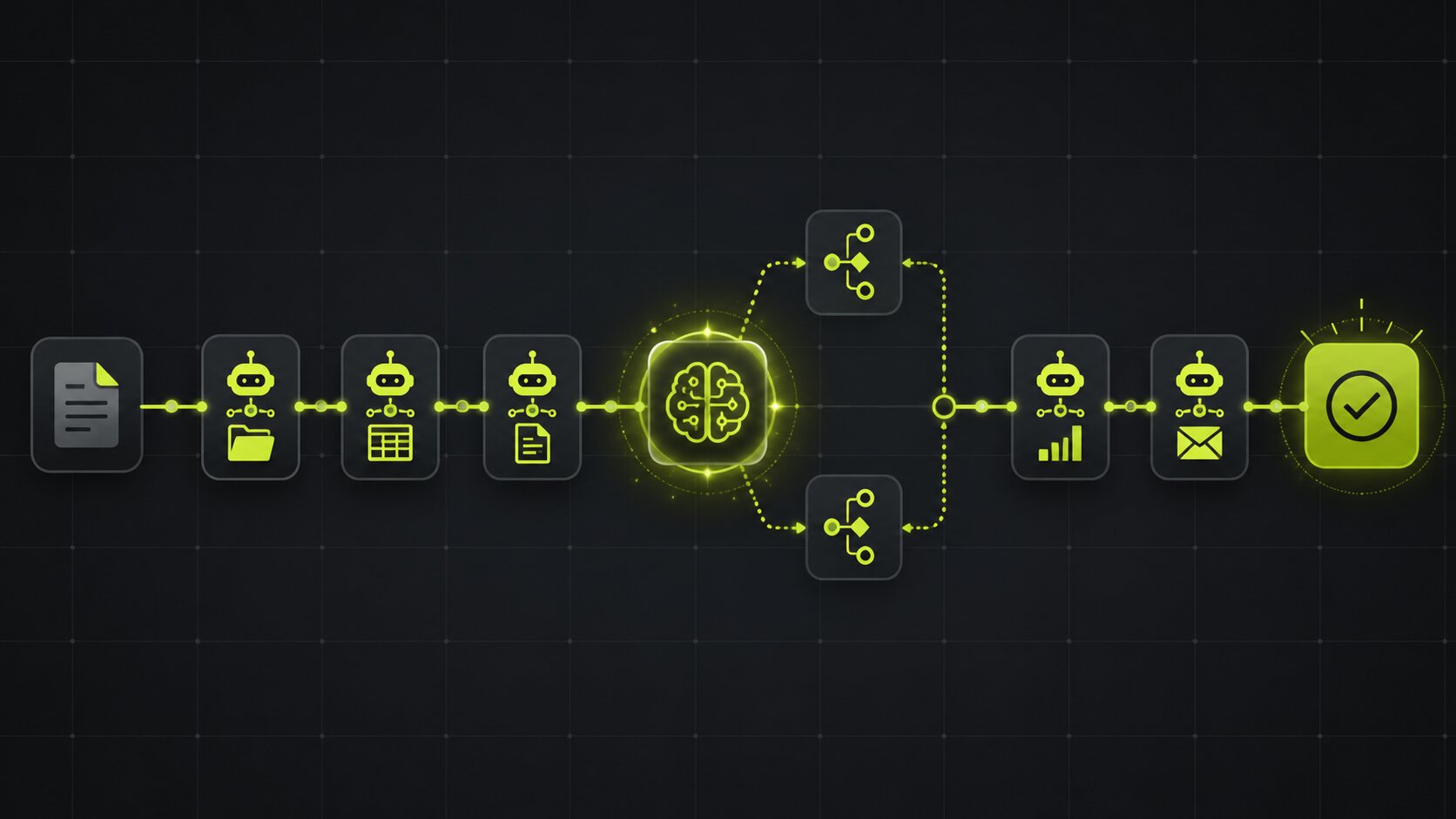
In practice, the smartest automation is rarely all one or the other. Most real processes are a mix of deterministic steps, which rule-based automation handles cheaply and reliably, and judgement-heavy steps, where an agent adds the ability to think. The strongest designs use each for what it does best, with rules doing the predictable work and an agent stepping in where interpretation is needed.
That combination is at the centre of how we approach agentic process automation, because the goal is never to use the most impressive technology, but to automate the most of a process reliably. Rules where the work is predictable, agents where it is not, and a clear head about which is which.
How we approach it
We start from the process, not the tool. We map where the work is genuinely rule-based and where it needs judgement, apply rule-based automation to the deterministic parts because it is reliable and cheap, and bring in agents for the ambiguous, unstructured, or decision-heavy parts. The aim is to automate as much of the process as possible without forcing the wrong tool onto the wrong step.
That judgement is what we bring across more than 500 brands in the US, UK, and Canada. As a global company with our headquarters in Delaware and teams in London and Gurugram, the aim is consistent: automation that actually holds up in the real world, handling the predictable and the messy alike, rather than a demo that impresses until it meets a real exception.
Where this leaves you
The real difference between agentic process automation and traditional RPA is rules versus reasoning. RPA executes instructions flawlessly and fails the moment reality steps outside them; an agent pursues a goal and adapts to what it finds. Neither wins outright: rules for the stable and predictable, agents for the ambiguous and judgement-heavy, and a combination for the many processes that contain both. Understand which kind of work each step really is, and you can automate far more of your business reliably than either approach could alone. If you want to know which of your processes are ready for which, tell us how the work flows today and we will show you where the real automation is hiding.
Frequently Asked Questions
What is agentic process automation?
Agentic process automation uses AI agents that can reason, make decisions, and adapt to complete a process, rather than following a fixed script step by step. An agent is given a goal and the tools to reach it, and it works out how to handle the situation in front of it, including cases the designers did not spell out in advance. It is automation that can deal with variation and judgement, which is exactly where traditional rule-based automation tends to break.
What is the difference between agentic automation and RPA?
RPA, or robotic process automation, follows explicit rules: it does exactly what it was programmed to do, step by step, and stops or errors when it meets something outside those rules. Agentic automation is built on AI that can reason toward a goal, so it can handle ambiguity, interpret messy inputs, and make decisions the way a person would. Put simply, RPA follows instructions while an agent pursues an objective, which is why RPA excels at rigid, repetitive tasks and agentic automation shines where judgement and variation are involved.
Is agentic automation replacing RPA?
Not replacing so much as extending it. RPA remains excellent and cost-effective for stable, high-volume, rule-based tasks, and there is no reason to swap it out where it already works well. Agentic automation opens up the large set of processes RPA could never handle because they involve judgement, unstructured information, or constant exceptions. In most organisations the future is a combination: rule-based automation for the predictable parts and agents for the parts that need to think.
When should you use RPA vs agentic automation?
Use RPA when a process is stable, repetitive, and can be described as a clear set of rules, because it is reliable and inexpensive for exactly that. Reach for agentic automation when a process involves ambiguity, unstructured inputs, decisions, or frequent exceptions a fixed script cannot anticipate. Many real processes contain both, so the strongest designs use each where it fits: rules for the deterministic steps and an agent for the parts that need judgement.
What is an AI agent in automation?
An AI agent is a system given a goal and a set of tools, which then decides for itself what steps to take to achieve that goal. Instead of executing a pre-written sequence, it assesses the situation, chooses actions, uses the tools available to it, and adjusts as it goes. In automation, that means an agent can take on work that used to require a person precisely because it can handle the parts that were never fully predictable, rather than only the steps someone could script in advance.
Want this done for your brand?
Tell us where you are and what you are trying to grow. We will reply with a straight read on your situation and what is worth doing first. No obligation, no lock-in.